Embarking on a PhD journey is an exciting, albeit challenging, endeavor. One of the very first hurdles you’ll face is crafting an outstanding application, and at the heart of that application often lies a compelling cover letter. Many aspiring doctoral candidates find themselves searching for a solid cover letter template for PhD position to guide them, a resource that can transform a blank page into a persuasive argument for their candidacy.
Think of your cover letter not just as a formality, but as your personal introduction to the admissions committee and your potential supervisor. It’s your chance to tell your story, highlight your unique qualifications, and demonstrate genuine enthusiasm for the specific research project you’re applying to. Unlike your CV, which lists facts and achievements, the cover letter allows you to weave a narrative, showcasing your personality and academic passion.
A well-structured and thoughtfully written cover letter can truly set you apart from other highly qualified applicants. It’s where you connect the dots between your past experiences and your future aspirations, proving that you’re not just capable, but the ideal fit for their program. We’re here to walk you through the essential components and strategic approaches to help you craft a cover letter that not only meets expectations but exceeds them.
Crafting a Compelling PhD Cover Letter: What to Include
Your PhD cover letter is a strategic document, not merely a reiteration of your CV. It needs to tell a story that resonates with the faculty, demonstrating not just your academic prowess but also your potential as a future researcher. Every section should build a case for why you are the perfect candidate for their specific PhD opportunity.
The Opening: Hooking Your Reader
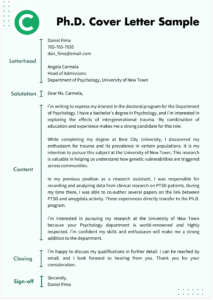
The very first paragraph needs to capture attention and immediately state your purpose. Clearly mention the specific PhD position you are applying for, the department, and ideally, the name of the supervisor you wish to work with. If you were referred by someone, or if you met the supervisor at a conference, this is the perfect place to mention it. Express your genuine enthusiasm for the project and how you learned about the opportunity.
Showcasing Your Academic Journey and Skills
This is where you delve into your background. Briefly outline your academic qualifications, focusing on degrees, relevant coursework, and any notable academic achievements. Think about projects, theses, or dissertations you’ve completed that are pertinent to the PhD you’re applying for. How have these experiences prepared you for advanced research?
Beyond grades, highlight the specific research skills you’ve acquired. Have you mastered particular laboratory techniques, statistical software, data analysis methods, or qualitative research approaches? Be specific. If you’ve presented at conferences, published papers, or contributed to research projects, mention these accomplishments. Quantify your contributions whenever possible – for instance, “analyzed a dataset of X patients,” or “designed and executed Y experiments.”
Aligning with the Research Project and Supervisor
This is arguably the most critical part of your cover letter. It’s not enough to just say you’re interested; you need to demonstrate that you’ve done your homework. Research the supervisor’s work extensively – read their recent publications, understand their research group’s current projects, and grasp their theoretical framework. Then, articulate why their specific research fascinates you and how it aligns with your own academic interests and career goals.
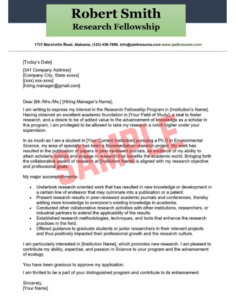
Explain why you believe you are a strong match for *this particular project*. What unique perspective, skills, or experiences can you bring to their lab? Perhaps you have experience with a specific methodology they use, or your previous research directly complements a gap in their current work. Show them that you understand the project’s significance and how you envision contributing to it. This demonstrates proactive engagement and genuine intellectual curiosity.
The Closing: Professionalism and Next Steps
Conclude your cover letter by reiterating your enthusiasm for the position and your confidence in your ability to contribute significantly to the research group. Express your eagerness for an interview and the opportunity to discuss your application further. Thank them for their time and consideration. Maintain a professional, courteous, and forward-looking tone throughout your closing.
Tips for Making Your PhD Cover Letter Stand Out
While a solid framework is crucial, the nuances of your cover letter are what truly make it memorable. Moving beyond a generic cover letter template for PhD position, you need to infuse it with your unique academic voice and a clear understanding of the opportunity at hand. Personalization is key; generic letters rarely impress.
Always tailor each letter specifically to the position and the supervisor. This means more than just changing the names. It involves weaving in specific details about their research, publications, or the department’s focus. Showing that you’ve invested time in understanding their work communicates a level of dedication and serious intent that automated applications simply cannot.
Before you hit send, ensure your letter is flawless. Typos, grammatical errors, or awkward phrasing can undermine your credibility. Have a trusted friend, mentor, or career advisor proofread your letter. Sometimes a fresh pair of eyes can spot mistakes or suggest improvements that you might have overlooked after countless revisions.
- Do Your Homework Thoroughly: Research the specific PhD project, the supervisor’s recent publications, and the overall research focus of their lab. Show genuine intellectual curiosity.
- Highlight Alignment, Not Just Interest: Explain *how* your skills, experience, and research interests specifically align with their work, not just that you find it interesting.
- Be Specific and Provide Examples: Instead of saying “I have strong research skills,” illustrate it with an example: “My master’s thesis involved designing and conducting X experiments, leading to Y significant findings.”
- Maintain a Professional, Yet Engaging Tone: Your letter should be formal but also convey your passion and personality.
- Keep It Concise: Aim for one page, ideally. Admissions committees are busy, and a succinct, impactful letter is more effective than a rambling one.
- Proofread Meticulously: Errors can significantly detract from your application. Read it aloud, use grammar checkers, and ask someone else to review it.
Mastering the art of the cover letter is a significant step towards securing your desired PhD position. It’s a reflection of your organizational skills, your communication abilities, and your commitment to the rigorous demands of doctoral research. By carefully articulating your journey, your aspirations, and your fit for a specific program, you create a powerful argument for your inclusion in their esteemed ranks.
Remember, this document is your opportunity to bridge the gap between your achievements and the potential you hold for future groundbreaking contributions. Invest the time and effort to craft a truly exceptional letter, and you will significantly enhance your chances of embarking on the exciting and rewarding path of a PhD candidate.