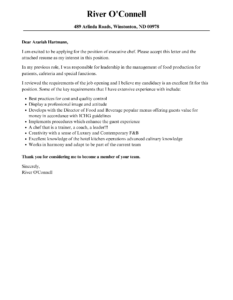
Stepping into the professional culinary world requires more than just exceptional knife skills and a passion for flavor; it also demands a polished presentation of your experience and aspirations. While your resume is crucial for listing your qualifications, a well-crafted cover letter is your chance to truly showcase your personality, your unique culinary philosophy, and why you are the perfect ingredient for a particular kitchen. That’s where a solid cover letter template for chef job applications becomes incredibly handy, guiding you to articulate your story in a compelling way.
Think of your cover letter as the amuse-bouche before the main course of your resume. It’s a tantalizing preview designed to whet the appetite of a hiring manager, making them eager to learn more about you. In a competitive industry where everyone claims to be passionate, your letter needs to cut through the noise, demonstrating not just what you’ve done, but how you think, create, and lead in a high-pressure environment.
Navigating the job market as a chef can feel like a rush during dinner service – fast-paced and demanding. With the right guidance, you can transform a daunting task into an opportunity to shine. This article will walk you through the essential components of a standout cover letter, offering insights and a practical framework to help you land that dream culinary position, whether you’re aiming for a bustling bistro or a Michelin-starred establishment.
Crafting Your Culinary Narrative: What Makes a Chef’s Cover Letter Sizzle
Your cover letter isn’t just a formality; it’s your personal pitch, a chance to convey enthusiasm and expertise that a bulleted list on a resume can’t quite capture. Start by addressing the hiring manager by name if possible. A quick search on LinkedIn or the restaurant’s website can often reveal this information. A generic “To Whom It May Concern” immediately signals a lack of effort and can make your application feel impersonal, which is the last thing you want in a profession built on personal touch and attention to detail.
In your opening paragraph, clearly state the position you’re applying for and where you saw the advertisement. More importantly, briefly articulate why you’re drawn to this specific role and establishment. Did you dine there and were impressed by their innovative menu? Do you admire their commitment to local sourcing? Showing that you’ve done your homework and understand their culinary vision instantly sets you apart from applicants who are just sending out mass applications.
The body paragraphs are where you truly connect your experience to the job requirements. Instead of simply repeating what’s on your resume, elaborate on a few key achievements that are highly relevant to the chef position. For instance, if the job description emphasizes menu development, talk about a time you successfully created a new dish or seasonal menu that boosted customer satisfaction or reduced food waste. If leadership is a priority, share an example of how you mentored junior chefs or effectively managed a busy kitchen brigade during a challenging service.
Remember to use action verbs that resonate with the culinary profession: “orchestrated,” “innovated,” “curated,” “executed,” “transformed,” “pioneered.” These words paint a vivid picture of your capabilities and dynamism in the kitchen. Quantify your achievements whenever possible – did your new menu increase sales by a certain percentage? Did your inventory management system reduce costs by X amount? Numbers speak volumes and demonstrate tangible impact.
Beyond technical skills, highlight soft skills that are invaluable in a kitchen. Mention your ability to work under pressure, your commitment to teamwork, your creativity, problem-solving prowess, and your meticulous attention to detail regarding food safety and presentation. These attributes are often as important as your culinary techniques, especially in a fast-paced and collaborative environment.
Finally, reiterate your enthusiasm for the role and the establishment. Conclude with a clear call to action, expressing your eagerness to discuss your qualifications further in an interview. Thank them for their time and consideration, and sign off professionally. A strong closing reinforces your interest and leaves a lasting positive impression, ensuring your application, guided by a solid cover letter template for chef job requirements, stands out.
Presenting Your Best Self: Tips for a Polished Application
Once you’ve poured your heart and skills into writing a compelling cover letter, the presentation is paramount. Just like a beautifully plated dish, a meticulously formatted and error-free letter speaks volumes about your professionalism. Always proofread your letter multiple times. Even better, have a trusted friend or colleague review it. A fresh pair of eyes can often catch typos or grammatical errors that you might have overlooked, which can be critical for conveying attention to detail.
Consider the format and readability. Use a clean, professional font (like Arial or Calibri) in a readable size (10 or 12 point). Ensure there is adequate white space, with clear paragraph breaks, to make the letter easy on the eyes. Hiring managers often scan documents quickly, so a well-organized letter that’s easy to digest will fare much better than a dense block of text.
Tailoring your cover letter for each specific job application is non-negotiable. While a template provides a great starting point, never send a generic letter. Every kitchen has its unique vibe, menu, and challenges. Taking the time to customize your letter for each opportunity shows genuine interest and respect for the establishment. It demonstrates that you’re not just looking for any job, but this specific one, because you believe your skills and passion align perfectly with their vision.
Landing a chef position is a journey that requires skill, passion, and a touch of strategic communication. Your cover letter serves as your initial introduction, a chance to set the tone and leave a memorable impression before your resume even gets a deep dive. By focusing on personalization, showcasing your unique culinary narrative, and meticulously presenting your application, you’re not just applying for a job; you’re beginning a conversation.
Remember, every word in your cover letter contributes to the overall flavor of your application. Take your time, be authentic, and let your passion for food and excellence shine through. A thoughtful and well-articulated letter can be the key ingredient that unlocks the next exciting chapter in your culinary career.