Navigating the financial aspects of project-based work can often feel like a complex puzzle. Whether you are a freelance consultant, a small business owner, or managing larger construction projects, ensuring fair and transparent billing is paramount for maintaining healthy client relationships and a sustainable business. Many projects, especially those with evolving scopes or where the exact costs are hard to pin down upfront, benefit from a flexible yet structured billing approach.
One such approach that has gained popularity for its fairness and transparency is the cost plus fixed fee model. This method ensures that the service provider is reimbursed for all approved costs incurred during the project, in addition to receiving a pre-agreed fixed fee for their services, which typically covers profit and overhead. It’s a win-win, offering clients clarity on actual expenses and providers a guaranteed return.
However, the effectiveness of this billing model hinges significantly on how these costs and fees are presented. A poorly organized or incomplete invoice can lead to confusion, delays in payment, and even disputes. That’s precisely where a well-structured cost plus fixed fee invoice template becomes an indispensable tool, streamlining your financial process and clearly communicating the value you deliver.
Understanding the Cost Plus Fixed Fee Model and Its Benefits
The cost plus fixed fee model is a contracting strategy where the client agrees to pay the service provider for the actual costs incurred in the project, plus a predetermined lump sum fee. The "costs" can include a wide range of expenses such as labor, materials, equipment rental, and subcontractors. These are typically actual expenditures, often requiring detailed documentation and receipts to be submitted to the client. The "fixed fee," on the other hand, is an agreed-upon amount that remains constant regardless of the actual project costs. This fee is often intended to cover the contractor’s profit and general overhead not directly attributable to specific project costs.
This particular model offers several distinct advantages. For clients, it provides a high degree of transparency, as they can see exactly where their money is being spent. It also encourages a collaborative environment, as both parties are incentivized to track costs efficiently. For service providers, it mitigates the risk associated with fixed-price contracts, where unforeseen expenses could eat into profits. Instead, the fixed fee guarantees a predictable profit margin, and all legitimate costs are covered. This makes it particularly suitable for projects where the scope might evolve, or where the exact cost of materials or labor is uncertain at the outset.
Proper documentation of all incurred costs is absolutely crucial for this model to work smoothly. This includes meticulous record-keeping for every hour worked by team members, every item purchased, and every service acquired from third-party vendors. Without robust documentation, clients may question the legitimacy of the "plus cost" component, leading to delays and potential disagreements. Therefore, integrating a systematic approach to cost tracking into your project management workflow is not just good practice, it’s essential for financial integrity.
Key Elements Your Invoice Must Include
A comprehensive and easy-to-understand invoice is the backbone of successful billing under the cost plus fixed fee model. It’s not just a request for payment; it’s a detailed report of services rendered and expenses incurred. Having a specialized cost plus fixed fee invoice template ensures that you consistently capture all necessary information without fail, projecting professionalism and clarity in every transaction.
Here are the critical components that any effective invoice for this billing structure should feature:
- Client and Vendor Details: Clear identification of both parties involved, including company names, addresses, and contact information.
- Invoice Number and Date: Unique identification for easy tracking and reference, along with the date the invoice was issued.
- Project Description: A concise overview of the project or services rendered, providing context for the charges.
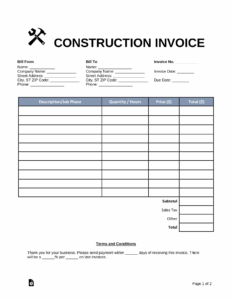
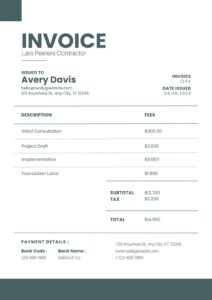
- Detailed Cost Breakdown: This is the core of the cost plus model. It should list all reimbursable expenses, categorized clearly (e.g., Labor, Materials, Subcontractors, Travel Expenses), with individual item descriptions, quantities, unit costs, and total for each. Supporting documentation (receipts, timesheets) should be referenced or attached.
- Fixed Fee Amount: The clearly stated, pre-agreed fixed sum for your services, separate from the reimbursable costs.
- Subtotal for Costs and Fixed Fee: Showing the calculation before taxes.
- Applicable Taxes: Any sales tax or VAT that needs to be applied.
- Total Amount Due: The grand total the client needs to pay.
- Payment Terms: Due date, acceptable payment methods, and any late payment policies.
Including all these elements ensures that your invoice leaves no room for ambiguity, fostering trust and facilitating prompt payment.
Streamlining Your Billing with a Ready-Made Template
The idea of creating an invoice from scratch for every project, especially one that requires a detailed breakdown of costs and a fixed fee, can be daunting and time-consuming. This is where the power of a ready-made cost plus fixed fee invoice template truly shines. Instead of reinventing the wheel for each billing cycle, you can leverage a pre-designed format that ensures consistency, accuracy, and professionalism. Such a template significantly reduces the administrative burden, freeing up valuable time that can be better spent on project delivery or client engagement.
A good template isn’t just a fancy layout; it’s a meticulously crafted document designed to meet the specific requirements of the cost plus fixed fee model. It anticipates the need for separate sections for variable costs and the fixed profit, guides you in entering all necessary details, and often includes auto-calculating fields to minimize mathematical errors. This level of automation and structure drastically lowers the chance of omissions or mistakes that could otherwise lead to client queries or payment delays.
Furthermore, using a consistent template across all your projects reinforces your brand’s image and professionalism. Clients appreciate clear, well-organized financial documents that are easy to understand. A standardized look and feel for your invoices communicate reliability and attention to detail, which in turn builds confidence and strengthens your business relationships. It shows that you are organized and serious about your financial operations, which can be a subtle yet powerful factor in client satisfaction.
Choosing or customizing the right cost plus fixed fee invoice template for your business needs means looking for flexibility. While some businesses might prefer a simple, clean design, others might require more complex fields for different types of cost categories or project phases. Many online platforms and software solutions offer downloadable templates that can be adapted to reflect your specific branding, including your logo and color scheme, ensuring that every invoice not only serves its functional purpose but also acts as a consistent touchpoint for your brand identity.
Ultimately, simplifying your financial management process is key to business efficiency. By adopting a reliable cost plus fixed fee invoice template, you ensure that your billing is transparent, accurate, and professional. This not only speeds up the payment process but also contributes to greater financial clarity for both you and your clients, fostering smoother operations and stronger partnerships. With the right tools in place, managing your project finances becomes less of a chore and more of a streamlined component of your overall business success.