As a freelance journalist, your passion lies in storytelling, investigative reporting, and crafting compelling narratives. However, the business side of your profession, particularly ensuring you get paid for your hard work, is just as crucial. It’s not enough to deliver stellar content; you also need a streamlined, professional way to bill your clients. This essential administrative task can sometimes feel like a distraction from your core creative work, but it’s a non-negotiable part of a successful freelance career.
Managing your finances efficiently is key to maintaining a healthy cash flow and accurately tracking your income. For many, creating an invoice from scratch for every assignment can be time-consuming and prone to errors. Imagine having to remember every detail, calculate every line item, and format it perfectly each time you complete an article, interview, or research project. This repetitive process can quickly eat into your valuable writing time.
This is where a dedicated freelance journalist invoice template becomes an invaluable tool. It transforms a potentially tedious chore into a quick and easy process, ensuring consistency, professionalism, and clarity in all your billing interactions. By utilizing a pre-designed structure, you can focus more on your craft and less on the nitty-gritty of financial paperwork, confident that your invoices are always accurate and presentable.
Why a Tailored Invoice Template is Your Best Friend
A well-designed invoice is more than just a request for payment; it’s a reflection of your professionalism and an important document for your financial records. For freelance journalists, whose services can vary widely from long-form articles to quick news briefs, a generic template simply might not cut it. A specialized freelance journalist invoice template ensures that every aspect of your unique services is accounted for, making it easier for both you and your clients to understand the charges.
Think about the sheer variety of work a journalist undertakes. You might spend hours on research, conduct multiple interviews, travel to locations, write drafts, and then go through several rounds of editing. Each of these components, or the final deliverables, needs to be clearly itemized so your client knows exactly what they are paying for. A tailored template allows you to break down these services, providing transparency and preventing misunderstandings about project scope and cost.
Beyond just clarity, using a consistent template saves you an immense amount of time. Instead of crafting a new document every time you complete an assignment, you simply populate your existing template with the relevant details for that specific project. This efficiency frees you up to take on more assignments, network, or simply enjoy some well-deserved downtime, rather than being bogged down in administrative tasks. It also helps in maintaining a uniform look and feel for all your invoices, reinforcing your brand identity.
Moreover, professional invoices are crucial for tax purposes and record-keeping. Having a standardized system means you’ll have an organized record of all your income, making tax season significantly less stressful. Should any discrepancies arise, clear, consistent invoices provide a paper trail that can easily resolve payment disputes, protecting your financial interests. It demonstrates that you operate a legitimate, organized business, fostering trust with your clients and potentially leading to more work.
Ultimately, a specialized template elevates your entire professional image. It communicates to your clients that you are organized, detail-oriented, and serious about your work. When clients receive a clear, well-structured invoice, they are more likely to process payments promptly and appreciate your systematic approach. This small detail can significantly contribute to building strong, lasting relationships with your clients, which is invaluable in the competitive world of freelance journalism.
Key Elements Your Invoice Template Must Include
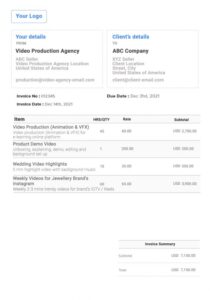
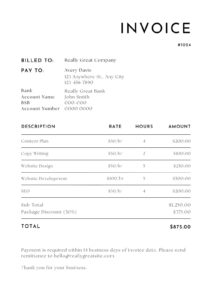
- Your full name and contact information (address, phone, email, website if applicable).
- Your client’s full name and contact information.
- A unique invoice number for easy tracking.
- The date the invoice was issued.
- The payment due date.
- A clear description of services rendered (e.g., “Feature Article: The Future of AI in Healthcare,” “Interview and Research for Quarterly Report”).
- The quantity or hours for each service.
- The agreed-upon rate per service or hour.
- The total amount due for each line item.
- The grand total amount due.
- Your preferred payment methods (bank transfer details, PayPal, etc.).
- Any specific payment terms or late payment clauses.
Customizing Your Template for Different Projects
While a standard template is great, remember that your journalistic assignments can vary greatly. One project might be a fixed-fee article, while another could be hourly work for editing, or even a combination. Your template should be flexible enough to accommodate these different billing structures. Consider having sections that can be easily adapted to include word counts, research hours, travel expenses, or even licensing fees for photos or illustrations you provide. This adaptability ensures your freelance journalist invoice template remains a versatile tool, no matter the scope or nature of your next big story.
Making the Most of Your Freelance Journalist Invoice Template
Having a robust freelance journalist invoice template is only the first step; knowing how to utilize it effectively is what truly maximizes its benefits. It is not just about filling in the blanks, but about integrating it into a smooth workflow that supports your business operations and ensures timely payments. This involves more than just sending the invoice; it encompasses your entire billing strategy, from when you send it to how you follow up.
One of the most critical aspects of effective invoicing is timing. As soon as a project is completed and approved, or at agreed-upon milestones for longer projects, send that invoice promptly. Delaying this process can delay your payment and make it harder for clients to connect the invoice to the recently delivered work. A quick turnaround time from project completion to invoice delivery signals your efficiency and organization, encouraging faster processing on the client’s end.
Moreover, clearly communicating your payment terms from the outset, ideally before a project even begins, is paramount. Your invoice should reiterate these terms, including the due date, any late payment penalties, and your preferred payment methods. Make it as easy as possible for your client to pay you. Providing multiple payment options and clear instructions reduces friction and removes any excuses for delayed payments, thereby safeguarding your cash flow.
Finally, do not be afraid to follow up politely if an invoice goes unpaid past its due date. A simple, friendly reminder can often be all it takes. Having a clear record of when the invoice was sent, when payment was due, and when you sent reminders, all facilitated by your consistent use of a template, makes this process much smoother. Embrace your invoice template as a foundational piece of your freelance journalism business strategy, and you’ll find that managing your finances becomes less of a chore and more of a systematic, empowering process.
Using a well-structured and thoughtfully prepared freelance journalist invoice template ensures that your administrative tasks are streamlined, professional, and consistent. It frees you from the mundane details of creating new billing documents for every assignment, allowing you to dedicate more energy to your creative endeavors and the stories you love to tell. By investing a little time upfront in setting up an effective invoicing system, you are essentially investing in the long-term health and growth of your freelance journalism career.