Landing a research associate position in today’s competitive scientific landscape requires more than just an impressive CV. While your academic achievements and laboratory experience are crucial, a well-crafted cover letter is your golden ticket to standing out from the crowd. It’s your chance to tell a compelling story, highlighting your unique qualifications and passion for the specific role. Many aspiring research associates overlook the power of this document, often submitting generic letters that fail to capture the attention of hiring managers.
This article aims to equip you with the knowledge and tools to create a stellar application. We understand the challenges of tailoring your credentials to each unique research opportunity. That’s why we’re providing a comprehensive cover letter template for research associate roles, designed to help you articulate your value effectively. By the end of this guide, you will understand the essential components of a winning cover letter, learn how to customize it for maximum impact, and walk away with a ready-to-use sample.
Crafting A Compelling Research Associate Cover Letter
Understanding the Purpose of Your Cover Letter
Your cover letter is much more than a summary of your resume; it’s an opportunity to narrate your professional journey and passion. It allows you to elaborate on specific experiences that directly align with the job description, providing context that a bulleted CV cannot. Think of it as your first interview, where you introduce yourself and make a strong case for why you are the ideal candidate.
This document serves as a bridge between your past accomplishments and your future potential within the specific research environment. It demonstrates your communication skills, attention to detail, and genuine interest in the role and the institution’s work. A well-written letter can significantly influence whether your application progresses to the next stage. Research shows that personalized cover letters can increase interview invitations by as much as 30%.
Key Elements to Include for Research Roles
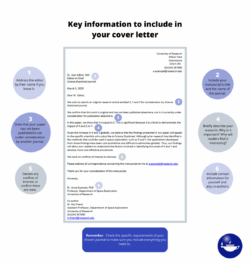
Every effective cover letter adheres to a standard structure, yet each section must be tailored to research associate positions. Begin with your contact information, the date, and the hiring manager’s details if known. Addressing the letter directly to the Principal Investigator (PI) or hiring manager shows initiative and attention to detail.
The introductory paragraph should state the position you are applying for, where you saw the advertisement, and a concise, enthusiastic statement about your suitability. The body paragraphs are where you connect your skills, experiences, and academic background to the specific requirements outlined in the job description. Provide concrete examples of your research projects, technical proficiencies, data analysis abilities, and contributions to scientific publications or presentations. Remember to use active voice and quantify achievements whenever possible.
Tailoring Your Application for Specific Labs and Projects
A generic cover letter is a one-way ticket to the rejection pile. To truly stand out, you must customize your letter for each application. Begin by thoroughly researching the laboratory, the Principal Investigator, and the specific research projects mentioned in the job posting. Understand their mission, recent publications, and ongoing work.
Integrate keywords from the job description and the lab’s research interests directly into your letter. Explain how your unique skills, whether it’s expertise in specific assays, bioinformatics tools, or animal models, will directly contribute to their ongoing projects. Demonstrating this alignment shows that you’ve done your homework and are genuinely invested in their work, not just any research role.
Sample Cover Letter Template For Research Associate Position
Structure and Formatting Tips for Professionalism
The visual presentation of your cover letter is just as important as its content. Use a clean, professional font like Arial, Calibri, or Times New Roman, typically in size 10 or 12. Maintain standard margins (1-inch) and single spacing for readability. Ensure your contact information is clear and consistent with your resume.
Break your letter into logical paragraphs, with a clear introduction, body, and conclusion. Avoid dense blocks of text, as they are difficult to read and can overwhelm the hiring manager. Proofread meticulously for any typos, grammatical errors, or awkward phrasing. A polished, error-free document reflects your professionalism and attention to detail.
Annotated Sample Research Associate Cover Letter
Here is a comprehensive **cover letter template for research associate** roles, complete with annotations to guide your writing process.
[Your Name]
[Your Address]
[Your Phone Number]
[Your Email Address]

[Date]

[Hiring Manager Name (if known), or "Hiring Committee" or "Principal Investigator"]
[Hiring Manager Title]
[Department Name]
[Institution Name]
[Institution Address]

Dear [Mr./Ms./Dr. Last Name or Hiring Committee],

[**Paragraph 1: Introduction**]
I am writing to express my enthusiastic interest in the Research Associate position within the [Specific Lab Name/Department] at [Institution Name], as advertised on [Platform where you saw the advertisement, e.g., institution website, LinkedIn]. With a strong background in [mention 1-2 key areas of expertise, e.g., molecular biology and cell culture techniques] and a proven track record in [mention 1-2 key accomplishments, e.g., contributing to peer-reviewed publications], I am confident that my skills and passion for scientific discovery align perfectly with your lab's focus on [mention specific lab research area].

[**Paragraph 2: Academic Background and Key Skills Alignment**]
During my [e.g., Master’s program/previous role as a Research Assistant] at [Previous Institution], I gained extensive hands-on experience in a variety of laboratory techniques, including [list 3-4 specific techniques relevant to the job, e.g., PCR, Western blotting, flow cytometry, confocal microscopy]. My research project on [briefly mention your research topic] honed my abilities in [mention 2-3 key skills, e.g., experimental design, data analysis using R/Python, troubleshooting complex protocols]. I am adept at maintaining meticulous records and ensuring the integrity of experimental results.

[**Paragraph 3: Specific Project Contribution and Impact**]
One notable experience involved [describe a specific project or achievement]. In this project, I was responsible for [your specific role/tasks], which led to [quantifiable outcome or significant finding]. For example, I successfully [action verb] [specific task/technique] leading to [quantifiable result, e.g., a 20% increase in assay efficiency or identification of a novel gene variant]. My dedication to rigorous scientific methodology and problem-solving allowed me to contribute effectively to [mention broader project goal or publication].

[**Paragraph 4: Alignment with Lab’s Mission and Future Contributions**]
I am particularly drawn to [Institution Name]'s commitment to [mention institution's mission, e.g., translational research or scientific innovation] and the [Specific Lab Name]'s groundbreaking work in [mention specific research area from job description or lab website]. My goal is to contribute my expertise in [reiterate key skill] to your projects, especially those related to [mention specific project or area of interest from the job posting]. I am eager to learn new techniques and contribute to the collaborative environment of your team.

[**Paragraph 5: Conclusion and Call to Action**]
Thank you for considering my application. I am highly motivated to contribute to your research initiatives and am available for an interview at your earliest convenience to discuss how my qualifications can benefit your team. My full CV, which provides further detail on my research experience and publications, is attached for your review.

Sincerely,

[Your Typed Name]
Maximizing Your Impact: Advanced Tips For Research Associate Applicants
Quantifying Your Research Achievements
To truly make your application stand out, don’t just state your responsibilities; quantify your achievements. Numbers and metrics add credibility and demonstrate the tangible impact of your work. Instead of saying “managed samples,” say “managed a biorepository of over 5,000 patient samples with 100% accuracy.” This provides concrete evidence of your capabilities.
Think about the scale of your projects, the efficiency improvements you made, the amount of data you processed, or the number of experiments you successfully ran. If you contributed to publications, mention how many or their impact factor. Using specific data points strengthens your claims and shows potential employers the real value you bring.
Showcasing Essential Soft Skills for Collaboration
While technical proficiency is paramount, research environments also demand strong soft skills. Teamwork, problem-solving, critical thinking, and effective communication are vital for successful collaborations and project progression. Your cover letter is a perfect place to subtly highlight these attributes.
Mention instances where you effectively collaborated with team members, resolved a difficult experimental challenge, or clearly presented complex data to non-specialists. These examples demonstrate your ability to thrive in a dynamic research setting and contribute positively to the lab culture. Recruiters often look for candidates who can not only perform tasks but also think critically and communicate results clearly.
A strong cover letter is a crucial component of any successful research associate application, transforming your resume from a list of facts into a compelling narrative. By leveraging a well-structured cover letter template for research associate roles, personalizing your content, and showcasing both your technical and soft skills, you significantly enhance your chances of securing an interview. Remember, this document is your opportunity to express your unique value and passion for scientific discovery.
Take the time to tailor each application, focusing on how your specific background aligns with the lab’s mission and the principal investigator’s work. A thoughtful and articulate cover letter demonstrates your professionalism and genuine interest, making you a memorable candidate in a competitive field. Apply these strategies to confidently pursue your dream research position.