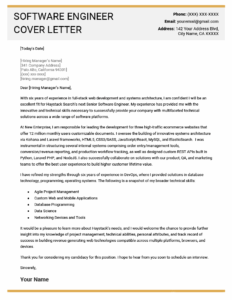
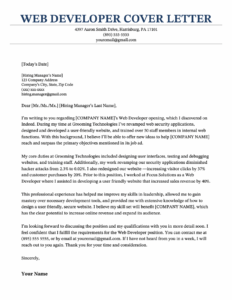
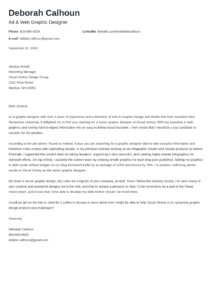
Landing a job in the fast-paced world of technology often feels like a full-time job in itself. You have spent countless hours perfecting your coding skills, building a robust portfolio, and optimizing your resume, yet the final hurdle remains the cover letter. Many developers dread this part of the process because it feels formal and restrictive, but it is actually the perfect place to showcase your personality and problem-solving mindset. If you are struggling to find the right words to introduce yourself to a potential employer, using a reliable web developer cover letter template can provide the structure you need to stand out from the stack of applications.
The goal of your cover letter is not to repeat every line of your resume, but rather to tell a story about how your specific experience translates into value for the company. Recruiters want to know how you think, how you handle bugs, and how you adapt to new frameworks. By using a web developer cover letter template as a baseline, you can ensure that you hit all the necessary professional notes while leaving plenty of space to inject your own technical passion and personal accomplishments. It is a strategic tool that bridges the gap between your raw code on GitHub and the human beings making the hiring decisions.
How to Customize Your Approach for Maximum Impact
When you start filling out your template, the most important rule is to avoid sounding like a robot. While it is tempting to use generic phrases about being a hard worker or a fast learner, hiring managers have seen those lines a thousand times. Instead, focus on specific projects where you solved a real business problem. Did you optimize a page load speed by forty percent? Did you transition a legacy codebase to a modern framework? These are the types of metrics that prove your worth better than any adjective ever could.
Structure is your best friend when you are trying to grab the attention of a busy engineering manager. Keep your paragraphs concise and use bullet points to highlight your technical stack or key achievements. A clean layout shows that you understand the importance of user experience, which is a trait that carries over into your coding style. Your cover letter itself acts as a small user interface for your candidacy, so keep the navigation simple, the content readable, and the value proposition clear.
Beyond technical skills, companies are looking for developers who can communicate effectively. If the job description emphasizes agile methodology, mention a time you worked closely with designers or product managers to hit a deadline. If it is a startup, emphasize your ability to wear multiple hats and adapt to shifting requirements. You should always aim to align your narrative with the specific values mentioned on the company website, as this proves you have done your homework and are genuinely interested in their unique challenges.
Finally, do not forget to include a strong closing statement that expresses enthusiasm and invites the next step. You want to show that you are excited about the prospect of joining their team and contributing to their mission. A good template will guide you to include these elements, but your voice is what makes the final document persuasive. By combining the professional structure of a template with your own authentic experiences, you transform a generic application into a compelling pitch that highlights why you are the best person for the role.
Refining Your Workflow for Multiple Applications
One of the biggest mistakes developers make is sending out the exact same letter to fifty different companies. Even with a high-quality draft, failing to tailor your content to the specific tech stack listed in the job description can result in an automated rejection. Take five minutes to identify the specific tools they use, such as React, Python, or AWS, and make sure those are mentioned early on in your writing. This demonstrates that you have read their requirements and are confident in your ability to hit the ground running with their current stack.
Consistency is key to a successful job hunt. Keep a master version of your letter that contains your standard background information and contact details, then build a library of paragraphs based on the types of roles you are targeting. If you are applying for both front-end and full-stack positions, having two distinct modular versions can save you significant time while keeping your applications relevant. Just remember that every company culture is different, so ensure that the tone of your writing matches the vibe you get from their careers page.
Lastly, always proofread your code and your prose. A developer who pays attention to detail in their cover letter is viewed as someone who will be meticulous with their pull requests and documentation. If you are worried about typos, read the text out loud or use a simple grammar checking tool to catch anything your eyes might have skipped over. Taking that extra moment to ensure quality demonstrates professionalism, which is exactly what hiring managers are looking for in their next engineering hire.
Securing an interview is all about how you present your narrative alongside your technical aptitude. By utilizing a clear structure, you allow your actual accomplishments to take center stage without getting lost in unnecessary fluff. Remember that every application is an opportunity to practice your professional communication, and with every iteration, you will become faster and more confident in articulating your value to potential teams.
Keep refining your process and never hesitate to highlight the unique perspective you bring to the table. Whether you are a junior developer just starting out or a seasoned professional looking for a new challenge, the effort you put into your application will always pay off. Stay patient, stay curious about the companies you apply to, and keep coding your way toward the career you truly deserve.