Submitting your meticulously crafted research paper to a journal is a significant milestone, and while the manuscript itself is paramount, the accompanying cover letter plays a surprisingly crucial role. Think of it as your paper’s first impression, a chance to make a strong argument for its consideration even before the editor delves into the technical details. Having a solid cover letter template for journal submission can truly streamline this process and ensure you don’t miss any critical elements. It’s not just a formality; it’s a strategic communication tool.
Many researchers, fresh from the intensity of their studies, might view the cover letter as a minor addendum, perhaps even an afterthought. However, an editor’s desk is often inundated with submissions. A well-written cover letter acts as a concise, compelling summary that highlights your work’s novelty, significance, and fit for their specific publication. It’s your opportunity to tell the editor, in your own words, why your research deserves their immediate attention.
Preparing your manuscript for submission can feel overwhelming, with countless guidelines to follow and formatting rules to adhere to. The thought of then having to compose a persuasive letter from scratch can add an extra layer of stress. This is where a robust template becomes invaluable, providing a clear structure and prompting you to include all the necessary information, allowing you to focus on tailoring the specifics rather than reinventing the wheel each time.
Crafting an Impactful Cover Letter: What Editors Really Want
When an editor picks up your cover letter, they aren’t just looking for politeness; they’re looking for efficiency and clarity. They want to quickly grasp the essence of your submission, its potential impact, and why it’s suitable for their journal. Think of the cover letter as a high-level executive summary designed to pique their interest and guide them towards a positive initial assessment of your manuscript.
The Essential Elements of a Powerful Cover Letter
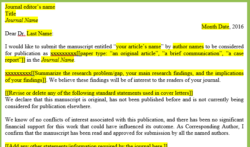
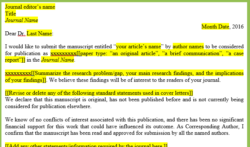
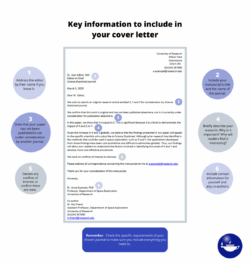
Every effective cover letter starts with the basics: your contact information, the current date, and the full contact details of the editor-in-chief or handling editor, along with the complete journal name. Accuracy here is key; a simple typo can unfortunately give a less-than-professional impression. Always ensure you’re addressing the correct person and journal.
The opening paragraph should be straightforward and to the point. Clearly state the title of your manuscript, the type of article it is (e.g., original research, review, case study), and explicitly mention that you are submitting it for consideration for publication in their journal. A brief, one-sentence summary of your key finding or the paper’s main contribution can also be included here to immediately capture attention.
Crucially, the body of your cover letter must articulate why your manuscript is a good fit for *this specific journal*. Editors are always looking for contributions that align with their journal’s scope and readership. Explain how your research advances the field, what novel insights it offers, and how it resonates with the topics typically published by them. This demonstrates that you’ve done your homework and aren’t simply sending a generic submission.
Beyond the academic fit, it’s vital to include statements about the originality of your work. Affirm that the manuscript is original, has not been previously published, and is not currently under consideration elsewhere. This ethical declaration is a standard requirement for most journals and assures the editor of your adherence to publication ethics. If your study involves human subjects or animal research, confirm that all necessary ethical approvals were obtained.
If there are any potential conflicts of interest, even if minor, this is the place to declare them transparently. Honesty and openness build trust with the journal. Finally, conclude by stating who will serve as the corresponding author and provide their contact details again for clarity.
A well-structured cover letter acts as a professional handshake, providing a clear and concise overview of your research while demonstrating respect for the journal’s guidelines and the editor’s time. It’s an opportunity to highlight your work’s strengths and its alignment with the journal’s mission, setting a positive tone for the review process.
Your Go-To Cover Letter Template for Journal Submission
Having a robust cover letter template for journal submission can significantly reduce the time and effort spent on this critical step, ensuring consistency and completeness with every submission. While each journal and manuscript will require specific tailoring, a solid framework provides a starting point that covers all essential information. This allows you to focus on personalizing the content to reflect the unique aspects of your research and the specific journal’s focus.
A well-organized template ensures you don’t inadvertently omit important details, from contact information to crucial ethical declarations. It acts as a checklist, guiding you through each necessary section and prompting you to think about how best to present your work’s significance. By having this structure in place, you can approach each submission with confidence, knowing all the fundamental components are covered.
Here’s a breakdown of the typical elements you’d include in your template:
- Your Full Name and Affiliation
- Your Contact Information (Email, Phone)
- Date of Submission
- Editor’s Full Name and Title (e.g., Editor-in-Chief)
- Journal Name and Address
- Salutation (e.g., “Dear Dr. [Editor’s Last Name]”)
- Introductory Paragraph: Manuscript title, type, and statement of submission
- Body Paragraphs:
- Briefly summarize the main findings or hypothesis.
- Explain the novelty and significance of your work.
- Articulate why your manuscript is a suitable fit for this specific journal.
- Declarations:
- Confirmation of originality and no prior publication.
- Statement of no concurrent submission elsewhere.
- Disclosure of any conflicts of interest.
- Ethical approval statements (if applicable).
- Concluding Remarks:
- Offer to provide further information.
- State the corresponding author’s contact details.
- Closing (e.g., “Sincerely,” or “Regards,”)
- Your Typed Name and Signature
Remember, this template is a flexible guide. You’ll always want to adapt the specific wording and emphasis for each submission, taking into account the journal’s guidelines, its scope, and the unique contributions of your paper. Personalization is key to making your letter stand out and resonate with the editorial team.
Ultimately, a meticulously prepared cover letter can significantly enhance the initial perception of your manuscript. It demonstrates professionalism, attention to detail, and a clear understanding of your research’s place within the broader academic discourse. This careful presentation can indeed pave the way for a smoother review process and a higher likelihood of acceptance.