Sending items across international borders can often feel like navigating a complex maze, especially when no money is changing hands. Whether you’re a small business sending out product samples, an individual gifting a personal item to a friend abroad, or a company facilitating a warranty return, you’ve likely encountered the term “commercial invoice.” But what happens when your shipment isn’t a sale, and therefore, has no commercial value?
This is where understanding the specifics of international shipping documentation becomes crucial. Without proper declaration, your non-sale items could face unnecessary delays at customs, incur unexpected duties for the recipient, or even be returned to sender. The key lies in clearly communicating the nature of your shipment to customs officials.
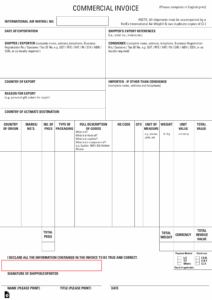
Fortunately, there’s a straightforward solution: utilizing a properly structured no commercial value invoice template. This specialized document ensures that customs authorities have all the necessary information about your shipment, confirming that it’s not for resale and therefore should be exempt from typical import duties and taxes, making your international dispatch much smoother.
Understanding the “No Commercial Value” Concept for International Shipments
The term “no commercial value” can sometimes be a bit misleading. It doesn’t mean the item is worthless, or that it has no inherent value; rather, it signifies that there hasn’t been a financial transaction or sale associated with the goods being shipped. In the eyes of customs, this distinction is incredibly important because it dictates how duties, taxes, and import regulations are applied. Goods declared with no commercial value are typically exempt from import taxes and duties that would otherwise be levied on a purchased item.
Why is making this declaration so critical? For starters, it prevents the recipient from being hit with unexpected customs fees for an item they haven’t purchased. Imagine sending a birthday gift to a family member only for them to receive a bill for import duties – not ideal! Beyond that, it helps customs processes move along more efficiently, as officials can quickly ascertain the nature of the shipment and apply the correct procedures, minimizing delays and potential complications. It’s all about transparency and compliance with international trade regulations.
There are many everyday scenarios where a clear declaration of no commercial value is absolutely essential. These situations, though varied, all share the common thread of goods crossing borders without a direct sale.
When You’ll Need a No Commercial Value Invoice Template
- Sending Samples: This includes product samples for marketing, testing, or review purposes, often distributed by businesses to potential clients or partners.
- Gifts: Personal items sent to friends or family members for holidays, birthdays, or just because, where no payment is exchanged.
- Warranty Replacements/Repairs: Items returned to a manufacturer for repair or replacement under warranty, and then shipped back to the customer.
- Personal Belongings: When individuals are moving internationally and shipping their personal effects.
- Marketing Materials: Brochures, display items, or non-sale promotional goods sent for events or distribution.
- Defective Goods for Return: Items being sent back to the supplier or manufacturer because they are faulty, not for resale.
It’s important to distinguish “no commercial value” from “zero value.” While both might seem similar, “zero value” often implies that an item once had value but has since lost it (e.g., scrap material), whereas “no commercial value” indicates that the item was never intended for sale or exchange for money in the first place. This subtle difference is significant for customs declarations.
Even if there’s no price involved, it’s still crucial to provide accurate and detailed information about the items. Customs officials need to understand exactly what is being shipped, its quantity, and the precise reason for its export. Clear descriptions help prevent misunderstandings and ensure your package continues its journey without a hitch.
Key Elements of an Effective No Commercial Value Invoice Template
A well-designed no commercial value invoice template is your best friend when shipping non-sale items internationally. It acts as a concise and standardized declaration, providing customs officials with all the necessary details in an easily digestible format. Even without a financial transaction, the structure and clarity of this document are paramount to avoiding customs headaches and ensuring smooth passage for your goods. Think of it as a formal letter explaining exactly why your package isn’t a typical commercial shipment.
Accuracy and completeness are the hallmarks of a good template. Every piece of information contributes to the overall clarity and helps customs make quick decisions. Omitting even minor details can lead to scrutiny, delays, or even the return of your shipment. Therefore, it’s vital to include a comprehensive set of data points, meticulously filled out for each shipment.
The following elements are fundamental to any effective no commercial value invoice template:
- Shipper’s Details: Your full name, company name (if applicable), complete address, and contact information.
- Recipient’s Details: The full name, company name (if applicable), complete address, and contact information of the person or entity receiving the goods.
- Date of Shipment: The specific date the invoice is created and the items are shipped.
- Invoice Number: A unique reference number for your own tracking purposes, even for non-commercial shipments.
- Reason for Export: A clear and concise statement explaining why the goods are being shipped (e.g., “Sample for evaluation,” “Warranty Replacement,” “Personal Gift,” “Returns for Repair”).
- Detailed Description of Goods: A precise and accurate description of each item, including material, purpose, and any identifying features. Avoid vague terms.
- Quantity of Each Item: The exact number of each item included in the shipment.
- Harmonized System (HS) Code: If known, including the HS code for each item can significantly expedite customs clearance. This is a globally standardized system of names and numbers for classifying traded products.
- Country of Origin: The country where each item was manufactured or produced.
- A Clear Statement: Prominently display “No Commercial Value – For Customs Purposes Only” or a similar phrase to immediately signal the nature of the shipment.
- Signature and Title of Shipper: A physical or digital signature confirming the accuracy of the information provided.
Each of these components serves a specific purpose in the customs clearance process. For instance, the reason for export helps customs agents understand the intent behind the shipment, while a detailed description and HS code allow them to classify the goods correctly. Providing all this information upfront reduces the need for customs to contact you or the recipient for clarification, thereby saving time and preventing potential storage fees or return costs.
When filling out your chosen no commercial value invoice template, always prioritize clarity and precision. Use straightforward language, ensure all fields are completed, and double-check for any typos or inaccuracies. A little extra care during preparation can prevent significant headaches down the line, ensuring your items reach their international destination without any unnecessary fuss.
Navigating international shipping documentation for items without commercial value doesn’t have to be daunting. By consistently using a properly completed no commercial value invoice template, you ensure compliance with customs regulations, prevent unexpected costs for your recipients, and facilitate a seamless journey for your packages. It transforms a potentially complex hurdle into a straightforward step in your shipping process.
Ultimately, whether you’re sending a cherished gift, a critical sample, or a repaired item, the right documentation is key to success. Adopting a clear and comprehensive template for your non-commercial shipments will save you time, reduce stress, and ensure your items reach their intended destination efficiently, allowing you to focus on what truly matters.