Venturing into the world of international trade can feel like navigating a complex maze, especially when it comes to documentation. Shipping goods across borders isn’t just about putting a label on a box and sending it off; it involves a crucial paper trail designed to ensure smooth transit, compliance with regulations, and timely delivery. One document stands out as absolutely essential for any international shipment: the commercial invoice.
This isn’t just another piece of paper; it’s the heartbeat of your international transaction. It tells customs officials in both the origin and destination countries exactly what’s inside your package, who’s sending it, who’s receiving it, and its value. Without a properly prepared commercial invoice, your shipment could face lengthy delays, incur unexpected costs, or even be rejected at the border, creating headaches for both you and your customer.
That’s where having a reliable commercial invoice template for international shipping becomes invaluable. It simplifies what might seem like an overwhelming task, ensuring you capture all the necessary details accurately and consistently. Think of it as your passport for goods, guiding them through the customs process efficiently and without a hitch, ultimately saving you time, money, and a great deal of stress.
What is a Commercial Invoice and Why is it Absolutely Essential?
At its core, a commercial invoice is a legal document exchanged between the seller (exporter) and the buyer (importer) in an international transaction. It serves as a bill for the goods sold and is fundamental for customs declarations. Unlike a proforma invoice, which is a preliminary bill, the commercial invoice is the final record of the sale, detailing the merchandise, its value, and the terms of sale.
Its primary purpose is to help customs authorities determine the duties and taxes that apply to your shipment. Imagine customs officials trying to process thousands of packages without clear information about their contents. A well-prepared commercial invoice provides them with all the data they need to assess tariffs, ensure no restricted items are being imported or exported, and verify compliance with international trade laws. This transparency is crucial for security and economic regulation.
Beyond customs, the commercial invoice plays a vital role in the financial aspects of your trade. It serves as proof of sale for accounting purposes, validates the amount due from the buyer, and outlines the payment terms. For both parties, it’s a critical record-keeping document that supports financial reconciliation and can be necessary for insurance claims, should anything go awry during transit.
Neglecting the details on your commercial invoice can lead to significant problems. Incomplete or inaccurate information can result in your shipment being held at customs, incurring storage fees, requiring resubmission of documents, or even facing penalties. These delays can damage your reputation, lead to lost sales, and frustrate your customers, making the small effort of getting it right upfront incredibly worthwhile.
Ultimately, the commercial invoice is more than just a formality; it’s a powerful tool that facilitates smooth international trade. It’s the central document that communicates all the critical aspects of your transaction to everyone involved, from freight forwarders to customs agents, ensuring clarity and compliance at every step of the journey.
Key Components of an Effective Commercial Invoice
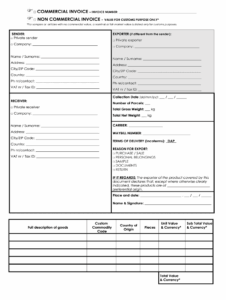
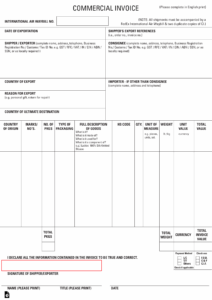
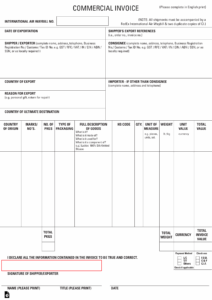
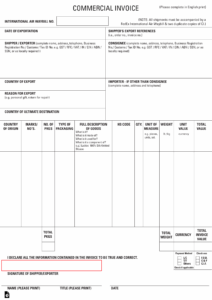
To ensure your international shipments sail through customs, your commercial invoice needs to be comprehensive. Here’s what you absolutely must include:
- Shipper/Exporter Details: Your full legal name or company name, address, and contact information.
- Consignee/Importer Details: The full legal name or company name, address, and contact information of the recipient.
- Invoice Number and Date: A unique invoice number for tracking and the date the invoice was created.
- Purchase Order Number: If applicable, the buyer’s purchase order number to link the invoice to the original order.
- Detailed Description of Goods: A clear, specific description of each item, including its common name, material composition, and intended use. Avoid vague terms.
- Quantity and Unit Price: The exact quantity of each item and its individual unit value.
- Total Value of Goods: The total sum for each line item and the grand total for all goods in the shipment.
- Incoterms: Specify the Incoterms (International Commercial Terms) that define the responsibilities and liabilities of the buyer and seller for the delivery of goods.
- Country of Origin: The country where each good was manufactured or produced.
- Reason for Export: State whether the shipment is a sale, gift, sample, repair, or return.
- Harmonized System (HS) Codes: The internationally standardized numerical classification for traded products. These are critical for customs.
- Signature of Exporter: A signature confirming the accuracy of the information provided.
Crafting Your Perfect Commercial Invoice Template For International Shipping
While the core components of a commercial invoice remain consistent, the way you present and manage this information can significantly impact your efficiency. Utilizing a well-structured commercial invoice template for international shipping allows you to standardize your process, reduce errors, and ensure that no critical detail is overlooked with each shipment you send out.
When preparing your template, start with the static information – your company details, for instance – to save time. Then, focus on the dynamic fields that will change with each shipment, such as the consignee’s information, the specific goods being shipped, quantities, and values. Remember to design it with clarity in mind, making it easy for both you and customs officials to read and understand the information at a glance.
One of the biggest advantages of using a template is the ability to avoid common pitfalls. Misclassifying goods, omitting HS codes, providing insufficient descriptions, or using incorrect Incoterms are frequent errors that can bring your shipment to a halt. A robust template prompts you for all these necessary fields, acting as a checklist to ensure complete compliance before your package even leaves the warehouse.
By investing time into creating or adopting a professional template, you are not just filling out a form; you are streamlining your entire international shipping operation. It fosters consistency across all your exports, significantly cuts down on administrative time, and builds a reputation for reliability with customs authorities and your international clients. This proactive approach ensures your goods move smoothly and predictably, strengthening your global trade relationships.
- Always be meticulously precise with your goods descriptions. “Electronics” isn’t enough; “Smartphone, Brand X, Model Y” is what’s needed.
- Ensure you have the correct Harmonized System (HS) codes for every item. These codes speak a universal language to customs officials worldwide.
- Thoroughly understand and correctly apply Incoterms. They dictate who pays for what and at what point responsibility transfers.
- Double-check all numerical entries, especially quantities and values, as even a small typo can cause significant issues.
- Keep clear digital and physical copies of every commercial invoice for your records and potential future reference or audits.
Navigating the intricacies of international shipping demands careful attention to detail, and the commercial invoice stands as the cornerstone of this process. It’s the critical document that ensures transparency, facilitates customs clearance, and confirms the financial terms of your global transactions. Getting it right is not merely a bureaucratic chore; it’s a strategic move that safeguards your shipments and your business reputation.
By leveraging a comprehensive and accurately completed commercial invoice template, you empower your business to engage in international trade with confidence and efficiency. It simplifies compliance, minimizes the risk of costly delays, and ultimately helps you deliver on your promises to customers worldwide. Embrace this essential tool, and watch your global shipments move from origin to destination with remarkable ease and reliability.