Navigating the job market as a computer science professional can be both exciting and challenging. You have the skills, the passion, and the drive, but how do you effectively convey that on paper before an interview? That’s where a strong cover letter comes in. It’s your chance to make a memorable first impression, demonstrating not just your technical prowess but also your personality and enthusiasm. Finding the right cover letter template for computer science can be a game-changer, helping you stand out from a sea of applicants.
Think of your cover letter as a personalized pitch. While your resume lists your achievements, your cover letter tells a story. It explains why you are interested in this specific role at this specific company, connecting your unique experiences and skills directly to their needs. It allows you to elaborate on projects or experiences that might only get a bullet point on your resume, giving them context and impact.
In the competitive world of tech, simply having the right coding languages or a solid GPA isn’t always enough. Recruiters are looking for individuals who can think critically, solve problems creatively, and fit into their team culture. A well-crafted cover letter is your opportunity to show these qualities, making a compelling case for why you are the ideal candidate for the position.
Crafting Your Winning Computer Science Cover Letter
A brilliant cover letter goes beyond merely repeating what’s already on your resume. It’s an opportunity to truly shine, to personalize your application, and to show a genuine interest in the company and the role. Remember, hiring managers read countless applications, so making yours stand out with a conversational yet professional tone is key. You want them to feel like they’re getting to know you a little, even before they’ve seen your face.
Start by researching the company thoroughly. What’s their mission? What projects are they working on? Who are their key people? This research will help you tailor your letter, making it evident that you haven’t just sent out a generic application. Mentioning specific company achievements or values shows you’ve done your homework and are genuinely invested, not just mass-applying.
The Hook: Your Introduction
Your opening paragraph is crucial. It needs to grab the reader’s attention immediately. State the position you are applying for and where you saw the listing. More importantly, express your genuine excitement for the role and the company. Perhaps you’ve followed their work on a particular open-source project or admire their innovative approach to a specific technology. Make it clear why this particular role resonates with your career aspirations and passion for computer science.
Showcasing Your Skills: Body Paragraphs
This is where you connect your experiences to the job requirements. Don’t just list your skills; illustrate them. Instead of saying “Proficient in Python,” talk about a project where you used Python to develop a scalable web application that solved a particular user problem. Use concrete examples and quantify your achievements whenever possible. Did your code reduce processing time by 20 percent? Did you contribute to a feature that improved user engagement? These details are powerful.
Focus on demonstrating not just technical skills, but also soft skills. Computer science isn’t just about sitting in front of a screen; it’s about teamwork, problem-solving, communication, and adaptability. Share an instance where you collaborated effectively on a team project, debugged a complex issue, or presented a technical concept clearly to a non-technical audience. These insights provide a holistic view of you as a professional.
The Call to Action: Your Conclusion
In your closing paragraph, reiterate your enthusiasm for the position and the company. Briefly summarize why you believe you are an excellent fit. Crucially, include a clear call to action. Express your eagerness to discuss your qualifications further in an interview. Thank them for their time and consideration. Maintain a positive and forward-looking tone.
Proofreading is non-negotiable. A cover letter riddled with typos or grammatical errors can quickly undermine your credibility. Read it aloud to catch awkward phrasing, and if possible, have a trusted friend or mentor review it for clarity and impact. This final check ensures your meticulous effort pays off.
Essential Elements to Include
When you are putting together your cover letter, certain sections are non-negotiable for professionalism and clarity. Think of it as building a strong foundation before you add all the impressive architectural details. Ensuring these elements are present and correctly formatted makes your letter easy to read and digest for the hiring manager.
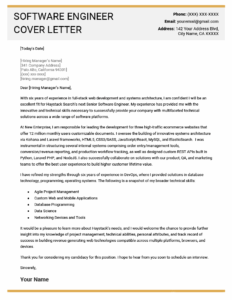
Your contact information should always be at the top. This includes your full name, phone number, email address, and ideally a link to your professional online presence, such as your LinkedIn profile or a personal portfolio website if it showcases relevant projects. This makes it simple for the recruiter to reach out to you. Below your contact information, include the date, followed by the hiring manager’s contact information, if you have it. Addressing the letter to a specific person rather than a generic “Hiring Manager” shows you’ve taken the initiative.
The content within your cover letter should specifically highlight aspects of your experience that are most relevant to the computer science role you are targeting. This might involve detailing a challenging coding project you tackled, explaining your contributions to a significant software development cycle, or even discussing your experience with a specific tech stack mentioned in the job description. Emphasize your problem-solving abilities and how you approach complex technical challenges. A good cover letter template for computer science will guide you in structuring these details effectively.
* Your Full Name and Contact Information
* Date of Application
* Hiring Manager Name and Title (if known)
* Company Name and Address
* A captivating introductory paragraph
* Body paragraphs linking your skills and experiences to job requirements
* A strong closing paragraph with a call to action
* Professional closing (Sincerely, Best regards)
* Your Typed Name
Remember, a cover letter is your chance to add a human element to your application. It’s an introduction to who you are beyond the bullet points of your resume, reflecting your personality, professionalism, and genuine interest in the role. Take the time to tailor each letter, and you will significantly increase your chances of making a lasting impression.
By following these guidelines and injecting your unique personality into each letter, you’ll craft compelling applications that effectively showcase your capabilities. A well-written cover letter doesn’t just open doors; it starts conversations and sets you apart in a competitive field, making your journey to your next great role smoother and more successful.