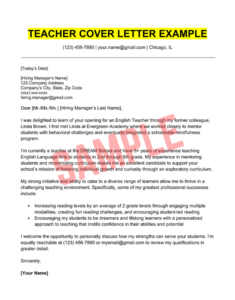
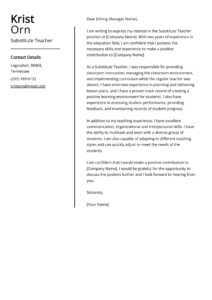
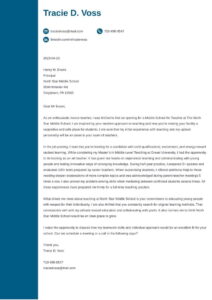
Landing a job in education often feels like a high stakes experiment where the variables need to be just right to get the desired result. When you are applying for a new role in a school, using a science teacher cover letter template can be the catalyst that transforms your application from a standard document into a compelling narrative. It is not just about listing your degrees or the number of years you have spent in a lab, but about showing a hiring manager that you have the passion to inspire the next generation of curious minds. A well structured letter helps you organize your thoughts and ensures that you do not miss the essential elements that principals and department heads are looking for in a candidate.
Writing a cover letter is your chance to speak directly to the school culture and the specific needs of their science department. While a resume provides a historical record of your professional journey, the cover letter provides the context. It allows you to explain your teaching philosophy and how you handle the challenges of a modern classroom. You want the reader to envision you standing in front of a white board or guiding students through a complex chemistry experiment with confidence and safety. This document is essentially your first introduction to a potential employer, so making it personal and professional is a necessity.
The goal is to move beyond the dry facts of your career and tell a story that resonates with educators. You want to highlight your ability to bridge the gap between complex scientific theories and the everyday lives of your students. Whether you are an experienced educator or a fresh graduate, the way you frame your skills can make all the difference. By focusing on your unique strengths and your genuine interest in the school, you can create a document that stands out in a crowded inbox and secures that all important interview.
Effective Strategies for Crafting Your Narrative
When you sit down to write, it is helpful to think of your cover letter as a bridge between the requirements listed in the job description and your specific background. You want to demonstrate that you have done your homework on the school. If the school has a strong focus on environmental science or a prestigious robotics club, make sure to mention how your expertise aligns with those programs. This level of detail shows that you are not just sending out generic applications, but that you are truly interested in becoming a part of their specific community.
Building a Strong Foundation with Your Opening
The first few sentences of your letter should be engaging and direct. Instead of starting with a boring statement about applying for the job, try to lead with your enthusiasm for science education. Mention a specific achievement or a brief anecdote about a successful lesson you led. This immediately sets a positive tone and makes the reader want to learn more about you. Your opening should clearly state the position you are seeking and why you believe your background makes you an ideal fit for the science department.
A great opening also acknowledges the school by name and perhaps mentions a recent achievement the school has had. This shows that you are observant and proactive. It establishes a connection right away, which is vital in a field as collaborative as teaching. You want to show that you are a team player who is ready to contribute to the school’s ongoing success and academic reputation.
Highlighting Practical Skills and Lab Safety
For a science teacher, practical experience is just as important as theoretical knowledge. You need to articulate your comfort level with laboratory equipment and your commitment to rigorous safety protocols. Explain how you manage a classroom during hands on activities to ensure that every student remains safe while they explore and discover. Discussing your experience with lab inventory and equipment maintenance can also be a significant plus for department heads who are looking for someone organized and responsible.
Furthermore, emphasize your ability to integrate technology into the curriculum. Whether it is using digital simulations, data collection software, or interactive white boards, showing that you are tech savvy is essential in today’s educational landscape. Mentioning specific tools or platforms you have used in the past can give the hiring committee a clear picture of your modern teaching style. This demonstrates that you are prepared to prepare students for a world that is increasingly driven by technology and scientific innovation.
Beyond the technical side, you should also discuss your approach to inquiry based learning. Explain how you encourage students to ask questions, form hypotheses, and test their ideas. This shows that you value critical thinking and want your students to do more than just memorize facts. By describing a time you fostered a sense of wonder in your classroom, you prove that you are an educator who can make the subject matter come alive for young learners.
Refining the Details of Your Professional Presentation
As you move toward the middle of your letter, you should focus on your ability to differentiate instruction for diverse learners. Every classroom contains students with varying levels of ability and interest in science. Discussing how you tailor your lessons to reach everyone, from those who struggle with the concepts to those who are ready for advanced challenges, is a key part of showing your competency. This indicates that you are a thoughtful and inclusive educator who is dedicated to the success of every individual student.
When you are preparing your final draft, using a science teacher cover letter template can help you keep the formatting clean and professional. However, make sure you are not just filling in the blanks. Add specific examples of your professional development, such as workshops you have attended or certifications you have earned. This shows that you are a lifelong learner who is committed to staying current with the latest scientific discoveries and pedagogical strategies. It also signals that you are an active participant in the broader educational community.
The closing of your letter should be as strong as your opening. Summarize why you are the best candidate for the role and express your desire for an interview to discuss your qualifications further. Thank the hiring committee for their time and consideration, and provide clear information on how they can contact you. A professional closing leaves a lasting impression and shows that you are polite and organized. It is the final piece of the puzzle that completes your professional image.
Finding the right balance between being professional and showing your personality is the secret to a great application. Science is a field of exploration and discovery, and your letter should reflect that same spirit. When you write from the heart about why you love teaching, it shines through the text. This authenticity is often what catches the eye of a principal who is looking for someone who will truly care about the students and the subject matter.
As you move forward with your job search, remember that each letter is an opportunity to grow and refine your message. Even if you do not get an interview right away, the process of articulating your goals and achievements is valuable. With a solid plan and a clear way to present your skills, you will eventually find the school where you can make a real difference. Your dedication to science education is a vital asset, and the right school will be lucky to have you on their faculty.