Navigating the competitive world of software development can feel like debugging a complex system without documentation. You’ve honed your coding skills, built impressive projects, and polished your resume, but there’s one crucial component often overlooked: the cover letter. A well-crafted cover letter is your chance to stand out from a sea of applicants, offering a glimpse into your personality and passion beyond bullet points. This guide will provide a comprehensive cover letter template for software developer roles, designed to help you articulate your unique value proposition effectively.
Many developers view the cover letter as a formality, perhaps even an outdated tradition. However, this couldn’t be further from the truth. In an era where AI can screen resumes for keywords, a human-written cover letter is a powerful tool to connect with hiring managers on a personal level. It’s an opportunity to tell your story, explain gaps in your resume, or express genuine enthusiasm for a specific company or project.
Think of your cover letter as your personal pitch. It’s where you bridge the gap between your technical capabilities and your potential impact on a team. By demonstrating your understanding of the company’s mission and how your skills align, you transform from just another applicant into a prospective problem-solver ready to contribute. Let’s dive into how you can make yours truly shine.
Crafting a Standout Cover Letter: The Developer’s Secret Weapon
When you’re applying for a software developer position, your resume typically showcases your technical prowess and project history. But the cover letter is where you bring your narrative to life. It’s your chance to explain not just what you’ve done, but why you did it, how you approached challenges, and what you learned along the way. This narrative can be incredibly compelling, painting a picture of a thoughtful, engaged, and proactive developer. It allows you to introduce yourself in a more personal way, setting a positive tone before they even look at your experience.
Understanding the Purpose of Your Cover Letter
Your cover letter serves several vital purposes. First, it explains why you’re interested in this specific role at this specific company. Generic cover letters are a red flag; they signal a lack of genuine interest and effort. Second, it highlights key accomplishments or skills from your resume that are most relevant to the job description, often elaborating on them with brief examples. Third, it allows you to demonstrate your communication skills, which are just as crucial as coding abilities in a collaborative development environment. A well-written letter shows you can articulate complex ideas clearly and concisely.
Tailoring Your Message for Each Application
One of the biggest mistakes job seekers make is sending the same cover letter to every company. Instead, treat each application as unique. Research the company, understand their products, culture, and recent projects. Look for keywords in the job description that resonate with your skills and experience. Mention specific company values or initiatives that excite you. This personalization demonstrates genuine interest and effort, making a strong impression on the hiring manager. It shows you’ve done your homework and aren’t just spamming applications.
Highlighting Your Technical Skills and Projects
While your resume lists your tech stack, your cover letter can contextualize it. Instead of just saying "Proficient in Python," you can mention a project where you used Python to solve a specific problem, perhaps automating a tedious task or building a data analysis tool. For example, "My recent personal project involved building a real-time chat application using Node.js and WebSockets, which honed my skills in asynchronous programming and database integration with MongoDB, mirroring some of the backend challenges mentioned in your job posting." This transforms a list into a story of applied skill.
Showcasing Your Problem-Solving Abilities
Software development is fundamentally about problem-solving. Your cover letter is an excellent place to illustrate this. You don’t need to write a full case study, but a concise example of a challenge you faced and how you overcame it using your technical skills and critical thinking can be incredibly impactful. Even a brief anecdote about debugging a particularly stubborn bug or optimizing a slow algorithm can speak volumes about your persistence and analytical approach. This demonstrates not just what you know, but how you think.
Structuring Your Cover Letter for Impact
A good cover letter usually follows a three-to-four paragraph structure: an introduction stating your interest and the role, one or two body paragraphs highlighting relevant skills and experiences tailored to the job, and a strong conclusion. Keep it concise, typically no more than one page. Use professional yet conversational language. Avoid jargon where simpler terms suffice, but don’t shy away from using technical terms accurately when describing your expertise. Readability is key; hiring managers often scan these documents quickly.
The All-Important Call to Action
Your cover letter should always end with a clear call to action. Reiterate your enthusiasm for the role and the company, and express your desire for an interview to discuss how your skills can contribute to their team. Make it easy for them to take the next step. A polite and confident closing reinforces your professional demeanor and eagerness to move forward in the hiring process.
A Practical Cover Letter Template for Software Developers
Putting together a strong cover letter doesn’t have to be a daunting task. While it’s essential to tailor each letter, having a solid framework can streamline the process significantly. This next section outlines a practical cover letter template for software developer roles that you can adapt for your applications. Remember, this is a starting point, not a rigid script.
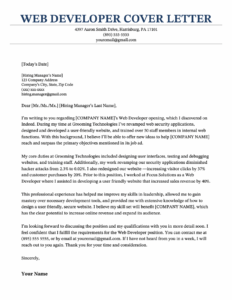
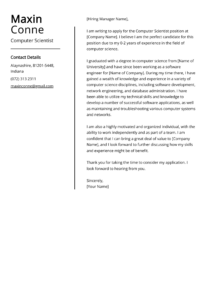
Think of this as a skeleton that you’ll flesh out with your unique experiences and the specific requirements of the job you’re targeting. The goal is to provide a clear, concise, and compelling narrative that complements your resume and piques the hiring manager’s interest. Here’s a structural outline you can follow:
-
Your Contact Information:
- [Your Name]
- [Your Address]
- [Your Phone Number]
- [Your Email]
- [Your LinkedIn Profile URL (Optional)]
- [Your GitHub Profile URL (Optional, but highly recommended for developers)]
-
Date:
- [Date]
-
Hiring Manager Contact Information (if known, otherwise use Department Name):
- [Hiring Manager Name (e.g., Ms. Jane Doe)]
- [Hiring Manager Title (e.g., Lead Software Engineer)]
- [Company Name]
- [Company Address]
-
Salutation:
- Dear [Mr./Ms./Mx. Last Name of Hiring Manager], (If you know their name)
- Dear [Hiring Team] or Dear [Department Name] Team, (If you don’t know their name)
-
Paragraph 1: Introduction
- Express your enthusiasm for the specific software developer position and where you saw the job posting. Briefly state your core qualification or what excites you most about this role/company.
- Example: "I am writing to express my enthusiastic interest in the [Job Title] position at [Company Name], as advertised on [Platform where you saw the ad]. With my strong background in [specific technology/area] and a passion for [relevant aspect of their work], I am confident I can make a significant contribution to your team."
-
Paragraph 2: Highlight Relevant Skills and Experience
- Connect your skills and experience directly to the job description. Provide one or two brief, impactful examples of how you’ve applied these skills in past projects. Focus on quantifiable achievements where possible.
- Example: "In my previous role at [Previous Company] as a [Your Previous Role], I was responsible for [briefly describe a key responsibility]. One notable achievement was [specific project/achievement] where I utilized [specific technologies] to [achieve a positive outcome, e.g., ‘reduce processing time by 20%’] or ‘improve user engagement.’ This experience aligns well with the requirements for [specific skill listed in job description]."
-
Paragraph 3: Showcase Fit and Future Contributions
- Explain why you are a good cultural fit for the company and how your personal values or career goals align with their mission. Discuss how you envision contributing to their success.
- Example: "I am particularly drawn to [Company Name]’s commitment to [mention a specific company value, project, or mission, e.g., ‘innovative solutions in sustainable energy’] and believe my passion for [your passion, e.g., ‘building scalable backend systems’] would be a strong asset. I am eager to bring my problem-solving abilities and collaborative spirit to your dynamic team and help drive your next generation of products."
-
Paragraph 4: Call to Action and Closing
- Reiterate your interest, express eagerness for an interview, and thank them for their time and consideration.
- Example: "Thank you for considering my application. I am very eager to learn more about this opportunity and discuss how my skills and experience can benefit [Company Name]. I have attached my resume for your review and look forward to the possibility of speaking with you soon."
-
Professional Closing:
- Sincerely,
- [Your Name]
Remember, the power of this template lies in its adaptability. Customize each section to reflect your genuine interest and highlight the aspects of your background that are most pertinent to the role.
Crafting a compelling cover letter is much like writing clean, efficient code: it requires attention to detail, a clear purpose, and an understanding of the end-user – in this case, the hiring manager. By taking the time to personalize your message and articulate your passion for software development, you significantly increase your chances of making a memorable impression. It’s an investment in your career that truly pays off, setting you apart as a thoughtful and dedicated professional.
Your journey to securing that dream software developer role begins with making every application count. By following these guidelines and utilizing a well-structured cover letter, you’ll present yourself not just as a skilled coder, but as a valuable team member ready to contribute to innovative projects and solve real-world problems. Keep refining your approach, and your next opportunity will surely follow.