Running a business, whether you’re a seasoned entrepreneur or just starting out as a freelancer, comes with a myriad of responsibilities. Beyond delivering excellent services or products, managing your finances efficiently is paramount. One of the most fundamental tools in your financial toolkit is the invoice. It’s not just a request for payment; it’s a crucial record of your transactions and a window into your business’s health.
However, a standard invoice often falls short when it comes to preparing for tax season. Many business owners find themselves scrambling through receipts and bank statements, trying to categorize every expense and income stream. This time-consuming process can be a major source of stress, leading to potential oversights that could impact your tax obligations or even missed opportunities for deductions.
Imagine a world where your invoicing process actively contributes to easier tax preparation, rather than adding to the burden. This is where the concept of a specialized invoice template becomes invaluable. By strategically designing your invoices, you can embed features that streamline your financial record-keeping, making tax time significantly less daunting and much more accurate.
Streamlining Your Financial Records: More Than Just an Invoice
A well-crafted invoice serves as a powerful instrument for both immediate payment collection and long-term financial organization. It acts as a legal record of goods sold or services rendered, detailing the agreement between you and your client. But its potential extends far beyond these basic functions, especially when you consider the intricate dance of tax compliance and business deductions. Without a clear system, financial reporting can quickly become a tangled mess, leaving you vulnerable to errors or lost deductible expenses come April.
Think about the traditional invoice – it typically lists the items, their prices, and the total. While functional, it often lacks the nuanced details that could instantly flag an expense as deductible or an income stream for a specific tax category. Business owners often spend countless hours at the end of the fiscal year attempting to decipher their financial activities, trying to match expenditures with the projects they relate to, or separating business costs from personal ones. This reactive approach is inefficient and prone to mistakes.
By integrating tax-centric elements directly into your invoicing process, you shift from reactive to proactive financial management. This means every time you send out an invoice, you’re not just requesting payment; you’re also building a robust, organized digital trail that directly supports your tax filing. It’s about creating a living document that captures the essence of the transaction, complete with information that tax authorities would appreciate.
Such a template transforms a mundane administrative task into a strategic financial activity. It ensures consistency across all your transactions, which is a cornerstone of good accounting practice. When all your invoices follow a uniform structure that considers tax implications, it drastically reduces the margin for error and the time spent on manual categorization.
Furthermore, a comprehensive invoice template allows you to easily generate reports that categorize your income and expenses. This clarity is not only beneficial for tax purposes but also for understanding your business’s profitability and identifying areas for growth or cost reduction. It moves beyond merely tracking money in and out, helping you to truly understand the financial dynamics of your operations.
Key Elements of a Tax-Savvy Invoice Template
- Your business’s legal name, address, and tax identification number.
- Client’s full name, address, and any relevant business identification.
- A unique, sequential invoice number for easy tracking.
- Date of issue and the due date for payment.
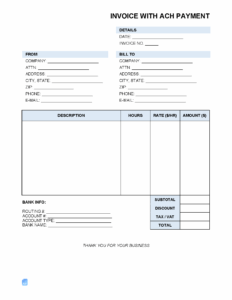
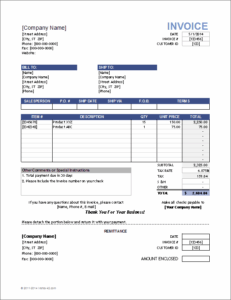
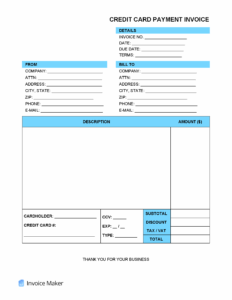
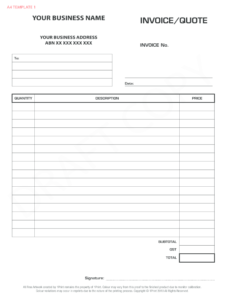
- Detailed description of services or products provided, including quantity and unit price.
- Subtotal, applicable sales tax, and the total amount due.
- Payment terms and accepted methods.
- Specific fields or categories for potential tax-deductible expenses related to the service or product billed.
Simplifying Tax Season with the Right Invoice Approach
The annual ritual of tax preparation often evokes a sense of dread for many business owners. The sheer volume of transactions, coupled with the need to accurately classify each one for tax purposes, can be overwhelming. However, by leveraging an `invoice template with tax deduction` features, you can significantly mitigate this stress and transform a daunting task into a manageable one. Imagine opening your accounting software or handing over your records to an accountant, and everything is already neatly categorized and clearly defined.
A smartly designed invoice assists in identifying and tracking various business deductions that might otherwise be overlooked. For instance, if you regularly bill clients for services that involve specific software subscriptions, travel costs, or materials, an invoice can be configured to highlight these as potential write-offs. This proactive identification means you won’t be sifting through bank statements months later, trying to recall which expense belonged to which project or client.
Consistency is key when it comes to financial record-keeping, especially for tax audits. Using a uniform invoice template across all your transactions ensures that every piece of information is captured in the same format. This uniformity not only aids your own organization but also presents a clear and professional financial history to tax authorities, demonstrating due diligence and accuracy in your records.
Ultimately, the goal is to save time and money. Time saved on manual data entry and categorization can be reinvested into growing your business or enjoying more personal time. Money saved through accurately claiming all eligible deductions directly impacts your bottom line. An effective invoice template is more than just a document; it’s an integral part of a robust financial strategy that champions efficiency and fiscal responsibility, making your business operations smoother from top to bottom.
Investing a little time upfront to customize or select the right invoicing solution can yield substantial benefits throughout the year, especially when tax deadlines loom. It’s a proactive step towards greater financial clarity and a testament to good business practices. By having your income and related expenses clearly documented and categorized from the outset, you gain peace of mind and more accurate financial insights.