Running your own electrical business means you are much more than just a skilled tradesperson. You are the CEO, the marketing department, the customer service representative, and, crucially, the accounts manager. Juggling site visits, complex wiring jobs, and client communications leaves little room for complicated paperwork. Yet, getting paid on time and maintaining a professional image hinges on one crucial document: your invoice.
Many self-employed electricians find themselves scribbling down job details on notepads or using generic forms that simply do not capture the specifics of their trade. This can lead to delays in payment, misunderstandings with clients, and a lot of wasted time trying to track down information. What you need is a streamlined, clear, and professional way to bill for your hard work, reflecting the quality and precision you bring to every project.
That is where a well-designed self employed electrician invoice template comes into play. It is not just about getting paid; it is about reinforcing your professionalism, ensuring clarity in your billing, and making your administrative tasks as efficient as your electrical installations. Let us explore what makes an exceptional invoice for your electrical business and why having a dedicated template is a game-changer.
What Your Electrician Invoice Absolutely Needs
A great invoice is more than just a request for money; it is a clear, detailed record of the services you have provided and the materials you have used. For self-employed electricians, precision is key, both in your work and in your billing. A comprehensive invoice ensures there are no surprises for the client and provides you with a solid record for your own bookkeeping and tax purposes. Think of it as the final, important connection you make with your client after a job well done.
Your Business Details
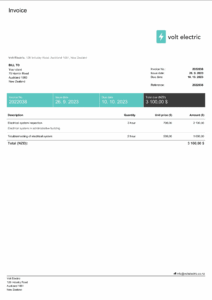
Every invoice should clearly identify who the invoice is coming from. This means including your full business name, your contact details such as phone number, email address, and physical mailing address. If you have a business logo, this is the perfect place to display it prominently. A logo adds a touch of professionalism and helps reinforce your brand, making your invoice instantly recognizable and trustworthy. It is a small detail that makes a big impact on perception.
Client Information
Equally important is detailing who the invoice is for. Include the client’s full name or company name, their billing address, and any specific contact person if applicable. If the electrical work was performed at a different location than the billing address, make sure to include the job site address as well. This clarity prevents any confusion about who needs to pay and for which specific job, especially if you handle multiple projects for the same client.
Job Specifics and Pricing Breakdown
This is where the true value of a self employed electrician invoice template shines. You need to meticulously list every service performed and every material used. This includes details like the date the services were rendered, a unique invoice number for easy tracking, and a clear due date for payment. For the work itself, be as descriptive as possible. Instead of just “repairs,” write “troubleshooting and repair of faulty circuit breaker in kitchen” or “installation of new LED recessed lighting in living room.”
When it comes to the financial breakdown, transparency is paramount. Detail your hourly rate and the number of hours worked, or provide a flat rate for specific tasks. List all materials used, specifying quantities and unit costs. This might include:
- Circuit breakers and fuses
- Electrical wire (by gauge and length)
- Outlets and switches
- Light fixtures
- Conduit and fittings
- Any specialized components
Sum up these costs to get a subtotal, then clearly show any applicable taxes (like sales tax on materials) and finally, the grand total due. This comprehensive breakdown builds trust and reduces the likelihood of clients questioning the charges.
Payment Terms and Notes
Do not forget to include your payment terms. This could be “Payment Due Upon Receipt,” “Net 30 Days,” or “50% Upfront, Balance Upon Completion.” Clearly state the accepted payment methods, whether that is bank transfer, check, credit card, or online payment platforms. You might also want to add a personalized note, thanking the client for their business or providing specific instructions if needed. A friendly closing can leave a lasting positive impression.
Why a Great Self Employed Electrician Invoice Template Matters
For any self-employed professional, efficiency and professionalism are cornerstones of success, and an excellent self employed electrician invoice template plays a huge role in both. It elevates your business beyond just the quality of your wiring and into the realm of organized, trustworthy service provision. This attention to detail reflects positively on your entire operation and fosters stronger client relationships.
Firstly, it vastly improves your professional image. A clean, well-structured, and branded invoice communicates that you are serious about your business. It shows that you value clarity and organization, which in turn suggests that you run all aspects of your business with the same level of care and precision. This helps instill confidence in your clients and makes them more likely to recommend your services.
Secondly, using a template ensures consistency and accuracy. Instead of creating a new invoice from scratch every time, a template provides all the necessary fields, minimizing the chances of forgetting crucial information like an invoice number, due date, or even a line item for materials. This consistency is invaluable for accurate record-keeping, which simplifies your bookkeeping process significantly and prepares you for tax season.
Furthermore, a standardized template speeds up the billing process. You can quickly populate the template with job-specific details and send it out, reducing the administrative burden and freeing up more of your valuable time to focus on what you do best: electrical work. Quicker invoicing often leads to quicker payments, which is essential for maintaining healthy cash flow in any small business.
Finally, a detailed invoice acts as a clear communication tool and a legal record. It itemizes exactly what was provided and for what cost, preventing disputes and misunderstandings down the line. Should any questions arise about the scope of work or the charges, you have a clear, documented history to refer back to, protecting both you and your client.
Adopting a well-structured invoice template is one of the smartest decisions a self-employed electrician can make. It streamlines your administrative tasks, enhances your professional reputation, and ensures you get paid accurately and on time for your expert services. This small change can have a big impact on the overall efficiency and perceived reliability of your electrical business.
Take the time to find or create a template that truly fits the specific needs of your electrical work. It will not only save you precious time and reduce stress but will also contribute significantly to the smooth operation and continued growth of your business, allowing you to focus more on delivering top-notch electrical solutions to your satisfied clients.