As a software developer or a firm offering cutting-edge tech solutions, you’re constantly focused on innovation, problem-solving, and delivering exceptional code. But let’s be honest, the administrative side of the business, particularly invoicing, can often feel like a necessary evil that pulls you away from your passion. Getting paid on time, and ensuring that all your hard work is properly accounted for, is crucial for your financial health and continued success.
Many developers, especially those new to freelancing or running a small agency, might simply send a basic bill or even just an email outlining charges. While this might suffice for some, it often lacks the professionalism, clarity, and detail needed for complex software projects. This informal approach can lead to misunderstandings, delayed payments, and unnecessary back-and-forth communication with clients.
That’s precisely where a well-structured and comprehensive invoice template becomes invaluable. It’s not just about listing numbers; it’s about presenting your value, maintaining transparency, and streamlining your entire payment process. This guide will walk you through what makes an effective invoice template for software development services, helping you create a system that works as hard as you do.
Why A Dedicated Invoice Template For Software Development Is Crucial
In the fast-paced world of technology, clear and professional communication is paramount, and your invoices are no exception. A generic invoice simply won’t cut it when you’re dealing with project milestones, intellectual property, and detailed technical work. A dedicated template elevates your business’s image, ensuring that every financial transaction reflects the same level of precision and professionalism you apply to your code. It serves as a clear record for both you and your client, minimizing disputes and providing a solid paper trail for accounting and tax purposes.
Software development projects often involve various stages, from initial consultation and design to coding, testing, deployment, and ongoing maintenance. Each of these phases might have different billing structures—hourly rates for consultation, fixed prices for specific modules, or recurring fees for support. Trying to track and present all these nuances without a consistent format can quickly become a headache, leading to errors and overlooked charges. A specialized invoice template for software development services helps you organize these complexities, ensuring every deliverable and service rendered is accurately represented.
Beyond simply getting paid, a good invoice template can improve cash flow by clearly stating payment terms and due dates, reducing the likelihood of late payments. It also makes it easier for your clients to understand exactly what they’re paying for, fostering trust and strengthening long-term relationships. When clients receive an invoice that is easy to read, comprehensive, and professional, they are more likely to process it promptly.
Key Elements Your Software Development Invoice Must Include
To ensure your invoice is complete and effective, it needs to contain several critical pieces of information. This isn’t just about good practice; in many regions, certain details are legally required. Let’s break down what your invoice should absolutely feature to avoid any ambiguity and facilitate smooth transactions.
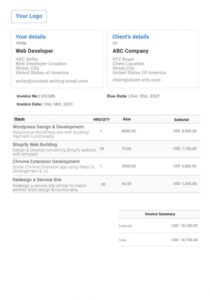
- Your Company Information: Your business name, address, phone number, email, and website.
- Client Company Information: The client’s business name, address, and primary contact person.
- Unique Invoice Number and Date: A distinct number for tracking and the date the invoice was issued.
- Due Date: When the payment is expected to be received.
- Project Name/Description: A clear, concise title for the software project or service provided.
- Itemized Services: Break down each service. For hourly work, list the task, date, hours worked, and hourly rate. For fixed-price components, describe the deliverable and its cost. Examples include “Backend API Development,” “Frontend UI/UX Implementation,” “Database Design,” “Quality Assurance Testing,” or “Project Management Hours.”
- Milestones Achieved: If billing by milestones, clearly state which ones have been completed and are being billed.
- Software Licenses/Third-Party Costs: Any external tools, licenses, or resources purchased on behalf of the client should be listed separately.
- Applicable Taxes: Clearly state any sales tax, VAT, or other levies applied.
- Subtotal and Total Amount Due: The sum of all services and expenses before tax, and the final amount the client needs to pay.
- Payment Terms: Specify accepted payment methods (bank transfer, credit card, etc.), any late payment fees, and discount terms.
- Professional Closing: A “Thank You” note and professional contact information.
Ensuring all these details are present not only streamlines the payment process but also provides a comprehensive record for both parties. This level of detail shows your client that you are meticulous and transparent in your dealings, building confidence in your service and expertise. A professionally presented invoice is a powerful tool for maintaining good client relations and securing future business.
Crafting Your Perfect Invoice Template For Software Development
Creating an invoice template doesn’t have to be a daunting task. You can start with a simple document in Word, Excel, or Google Docs, or explore specialized invoicing software that offers more advanced features and automation. The key is to design a template that is easy to read, clearly branded with your company logo, and consistently formatted. Think about the flow of information; clients should be able to quickly grasp the project details, the services rendered, and the total amount due without having to search for critical data.
Customization is paramount when dealing with the diverse nature of software development. Your template should be flexible enough to accommodate different types of projects—whether you’re billing for a complete mobile app build, a specific web service integration, ongoing support, or a complex data migration. You might need sections for “Phase 1: Discovery & Planning” and “Phase 2: Development Sprints,” or perhaps a breakdown of frontend, backend, and QA hours. The goal is to make it specific enough to your services while remaining clear to a non-technical client.
Avoid technical jargon where possible in the service descriptions unless it’s explicitly understood by your client. While “implemented RESTful API endpoints for user authentication” is accurate, consider simplifying it to “User Authentication System Development” if your client isn’t tech-savvy. The purpose of the invoice is clarity in billing, not a technical report. A well-designed template allows you to populate these descriptions easily, ensuring consistency and saving time on each new invoice you send out.
Ultimately, a robust invoice template for software development services acts as a silent ambassador for your business. It communicates professionalism, attention to detail, and transparency. Taking the time to craft or select the right template will not only save you countless hours in administrative work but also reinforce your reputation as a reliable and organized partner in the competitive tech industry.
Adopting a standardized yet flexible invoicing system minimizes the potential for financial discrepancies and ensures that your hard work translates directly into consistent revenue. It’s a proactive step towards building a sustainable and profitable software development business that values both its craft and its financial health.