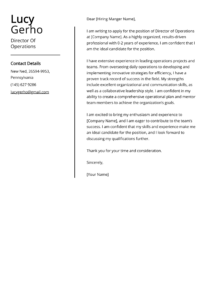
Landing a high-level leadership role requires more than just a stellar resume; it demands a story that connects your past wins to the company’s future goals. When you are scouting for a director of operations cover letter template, you are likely looking for a way to translate complex management skills into a compelling narrative. This role is the engine room of any organization, and your cover letter is the first chance to show that you can keep the gears turning smoothly while navigating through heavy seas of industry change.
Many candidates make the mistake of simply listing their duties from previous jobs. However, at the director level, hiring managers already know what the job entails. They want to know how you specifically do it better than anyone else. Your cover letter should act as a bridge, connecting the dots between those bullet points on your resume and the specific problems the hiring company is currently trying to solve.
Think of this document as your first high-stakes presentation to the board. It needs to be professional, yet accessible, showing both your strategic mindset and your ability to relate to people at all levels of the organization. By the time the reader finishes your letter, they should feel a sense of relief that they have finally found someone who understands the complexity of their operational needs.
Crafting Your Narrative as a Strategic Leader
The journey to becoming a top-tier operations leader is rarely a straight line. You have likely spent years honing your ability to optimize workflows, manage large teams, and oversee significant budgets. When writing your cover letter, you need to highlight these skills in a way that feels organic. Start by addressing the specific pain points of the company. Are they struggling with scaling up too fast, or are they looking to cut down on waste in their supply chain? Your opening should prove you have done your homework and understand their unique situation.
Once you have established that you know what they need, it is time to pivot to how you can provide it. Use specific examples of times you have turned a failing department around or implemented a new technology that saved the company thousands of hours. In the world of operations, data is your best friend. Instead of saying you improved efficiency, say you increased throughput by twenty percent over six months. This level of detail builds immediate credibility and sets you apart from candidates who speak only in generalities.
Focusing on Measurable Impact
While metrics are vital, do not forget the human element of operations. A great director knows that systems only work if the people behind them are engaged and motivated. Mentioning how you improved employee retention or fostered a culture of continuous improvement can be just as impactful as mentioning profit margins. It shows that you are a balanced leader who values the health of the organization as much as the bottom line.
Communication is another pillar of successful operations management that should shine through in your writing. Your ability to distill complex operational data into actionable insights for the executive team is a major part of the job. Your cover letter itself is a test of this skill. If you can explain your professional value clearly and concisely, the hiring manager will trust that you can do the same when presenting quarterly reports or strategic plans to the CEO.
Avoid the temptation to use too much industry jargon. While you want to sound like an expert, you also want to be relatable. A conversational tone makes you seem more like a future colleague rather than just another name in a stack of applications. It suggests that you are someone who is easy to work with and who can navigate the often-tense negotiations that happen between different departments in a large company.
Finally, remember that the goal of this document is to land the interview, not to tell your entire life story. Keep the focus on your most recent and relevant achievements. If you have a twenty-year career, you do not need to mention every single role you have ever held. Focus on the last five to seven years where your leadership impact was most significant and directly aligns with the role you are applying for today.
Structural Elements of a Winning Cover Letter
While the content of your letter is the most important part, the structure ensures that your message is delivered effectively. Using a solid director of operations cover letter template helps you stay organized and ensures you do not miss any critical components. You want to start with a strong header that includes your contact information and a professional greeting. From there, move into a hook that grabs attention immediately, perhaps by mentioning a major industry trend or a specific challenge the company is facing.
The body paragraphs should then expand on your qualifications, using the techniques we discussed earlier. You want to create a flow that leads the reader naturally from your past successes to your future potential with their team. This is where you can weave in your philosophy on leadership and operations. Ending with a strong call to action is essential; do not be afraid to state that you look forward to discussing how your background fits their current needs in an interview setting.
Here are a few specific items you should always aim to include in your draft to ensure it stands out to recruiters:
By following this structure, you create a professional document that feels intentional and well-thought-out. It shows that you respect the reader’s time and that you are capable of organizing complex information into a readable and persuasive format. This structural integrity reflects your own ability to bring order to operational chaos, which is exactly what a director of operations is hired to do.
Taking the time to personalize your approach will always yield better results than sending out a generic message. When you treat the application process as a strategic project, you demonstrate the very skills that make you a great operations leader. Each word you choose and each example you share serves as a building block in the professional image you are presenting to the world. It might take a bit more effort to tailor your message, but the payoff in terms of career opportunities is well worth the investment.
As you move forward in your job search, keep refining your message based on the feedback and responses you receive. The landscape of business is always changing, and your ability to adapt your narrative is just as important as your ability to adapt your operational strategies. With a clear focus on your unique value and a commitment to excellence in your communication, you are well on your way to securing a role that allows you to make a significant impact on an organization’s success.