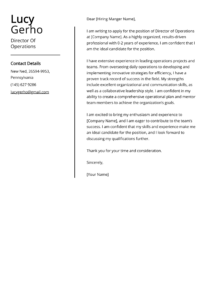
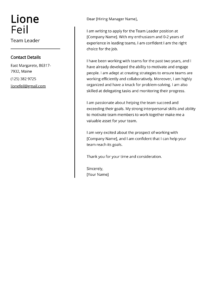
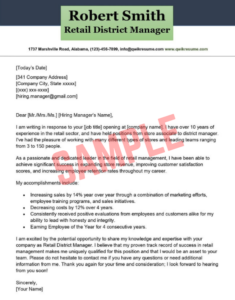
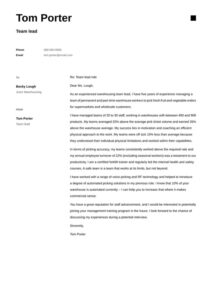
Starting your journey toward a new leadership role can feel overwhelming until you find a reliable program director cover letter template to guide your writing process. This position is a significant step up for many professionals because it demands more than just technical skills. It requires a vision for the future of the organization and the ability to manage complex moving parts while keeping a team motivated and productive. Having a structure to follow allows you to focus on your personal story rather than worrying about the layout of the page or whether you have included the right contact information.
When you are applying for a director level position, the hiring committee is looking for a person who can see the big picture. They want to know that you are not just a manager of tasks but a leader of people and a steward of resources. Your cover letter needs to bridge the gap between your resume and the specific needs of the company. It is your chance to explain the why behind your career moves and the how regarding your management style. A resume lists your past but your cover letter predicts your future success within their specific environment.
A conversational and professional tone is essential because it shows that you are approachable yet authoritative. You want the reader to feel like they are already having a productive meeting with you. By using a clear structure, you can highlight your biggest wins without sounding like you are just bragging. It is about showing value and demonstrating that you understand the challenges the organization is currently facing. Once you have the right framework in place, you can spend more time researching the company and less time staring at a blank document trying to figure out how to start your first sentence.
How to Structure Your Leadership Story for Maximum Impact
The first thing you must realize is that every paragraph in your letter serves a specific purpose in building your case as the best candidate. You are not just filling space but rather constructing a narrative that proves you can handle the pressure of high stakes decision making. Program directors are often the glue that holds various departments together, so your letter should reflect your ability to communicate effectively across different levels of an organization. You need to demonstrate that you can talk to executives about strategy and to staff members about daily operations with equal ease.
Focusing on Measurable Results and Strategic Growth
One of the biggest mistakes people make when using a template is being too vague about their achievements. Instead of saying that you managed a large budget, you should mention that you oversaw a three million dollar annual budget and reduced waste by fifteen percent over two years. Specific numbers give the hiring manager a clear idea of the scale at which you operate. It turns an abstract claim of being good at your job into a concrete piece of evidence that is hard to ignore. Use your middle paragraphs to dive deep into one or two major projects where your leadership made a visible difference.
Another area to focus on is your ability to develop people. A director is only as good as the team they lead. Talk about how you have mentored junior staff or how you restructured a department to improve workflow and morale. This shows that you care about the long term health of the organization and that you are capable of building a sustainable culture. In the modern workplace, soft skills like empathy and conflict resolution are just as important as your ability to analyze a spreadsheet or draft a project timeline.
Aligning Your Vision with Organizational Goals
The final part of your main body should connect your past experiences directly to the future of the company you want to join. This is where your research comes into play. If the organization is currently expanding into new markets, mention your experience with scaling operations. If they are focused on community outreach, highlight your history of building strong external partnerships. You want to make it easy for them to see you in the role by speaking their language and addressing their specific pain points directly.
Remember that leadership is often about navigating uncertainty. You can use your cover letter to describe a time when you had to pivot a program due to external changes or unexpected challenges. This proves that you are resilient and capable of keeping a cool head when things do not go according to plan. A program director needs to be a steady hand during turbulent times, and sharing a story of how you handled a crisis can be very persuasive to a recruiter who is looking for stability.
Lastly, ensure that your closing is as strong as your opening. You should reiterate your enthusiasm for the mission of the organization and clearly state that you are looking forward to discussing how your skills can help them achieve their goals. A confident closing leaves a lasting impression and sets the stage for a follow up interview. You want to leave them wanting to know more about your methods and your personality.
Practical Tips for Customizing Your Professional Document
While having a template is a great start, the magic happens in the customization. You should never send the exact same letter to two different companies. Even if the job titles are identical, the culture and the needs of each organization will be different. Take the time to read the job description carefully and pick out keywords that you can naturally weave into your paragraphs. This not only helps with automated tracking systems but also shows the human reader that you have done your homework and are genuinely interested in their specific mission.
Formatting is also a key factor in how your letter is perceived. Keep your font choice professional and ensure there is plenty of white space on the page. A wall of text is intimidating and might be skipped by a busy recruiter who only has a few seconds to scan each application. Use short paragraphs and clear breaks to make the document easy to read. If you are sending the letter as a digital file, make sure to save it as a PDF so that the formatting remains consistent regardless of what device the hiring manager is using to view it.
Before you send your application, it is a good idea to have a checklist of things to verify. This ensures that you do not miss any of the small details that could derail an otherwise perfect application. A simple oversight like misspelling the hiring manager name or getting the company name wrong can be a major red flag for a role that requires high attention to detail. Double check every line and perhaps even read the letter out loud to ensure the flow feels natural and conversational.
- Full contact information for both you and the employer
- A professional salutation that addresses a specific person if possible
- A strong opening hook that mentions the exact job title
- A summary of your most relevant leadership achievements
- A clear explanation of why you are interested in this specific organization
- A call to action that invites the reader to contact you for an interview
- A professional sign off and your signature
Taking the time to craft a high quality cover letter is one of the best investments you can make in your career. It is the first impression you make on a potential employer and it sets the tone for the rest of the hiring process. By focusing on your unique value and showing a genuine interest in the company, you can stand out from the crowd of other applicants. Even in a competitive job market, a well written letter that demonstrates both leadership and personality will always get noticed by the right people.
You have worked hard to reach this point in your career and you deserve a role that challenges and rewards you. Use these strategies to refine your message and present yourself as the capable and visionary leader you are. Once you hit that submit button, you can feel confident knowing that you have put your best foot forward. Success is just a few well crafted paragraphs away, so take a deep breath and start writing your next chapter today.