Navigating the job market as a nurse can feel like a marathon, especially when you’re trying to stand out amongst a pool of highly qualified candidates. Crafting the perfect application often begins with an excellent cover letter, and that’s where a solid cover letter template for nursing comes in handy. It’s more than just a formality; it’s your opportunity to make a memorable first impression, showcasing your passion and unique skills beyond what your resume might convey.
Think of your cover letter as a personalized introduction, a narrative that complements the bullet points on your CV. It allows you to explain gaps, highlight specific achievements, and articulate why you are genuinely excited about a particular role or institution. In a field as personal and demanding as nursing, demonstrating your enthusiasm and suitability through words can be just as important as your certifications.
This guide is designed to help you construct a compelling cover letter that resonates with hiring managers. We’ll explore the essential components, offer practical advice, and provide a clear framework so you can confidently apply for your dream nursing position. Let’s dive into making your application shine.
Crafting a Compelling Nursing Cover Letter: What to Include
Your cover letter is your voice on paper, an opportunity to connect with the hiring manager on a personal level before you even step into an interview. It’s not just about repeating what’s on your resume; it’s about weaving a story that highlights your most relevant experiences and explains why you are the ideal candidate for *this specific* nursing role. A well-crafted letter can significantly boost your chances of getting noticed.
The Power of a Strong Opening
The first paragraph is critical. It needs to grab the reader’s attention immediately. Start by stating the specific position you are applying for and where you saw the job advertised. More importantly, express genuine enthusiasm for the role and the institution. For instance, rather than just saying “I am applying for the RN position,” consider something like, “I am writing with immense enthusiasm to apply for the Registered Nurse position on your Pediatric Intensive Care Unit, as advertised on [Platform Name]. Having followed [Hospital Name]’s commitment to patient-centered care for some time, I am particularly drawn to your innovative approach to family involvement.”
Highlighting Your Unique Nursing Skills and Experiences
This is where you bridge the gap between your resume and the job description. Instead of merely listing your skills, provide brief, impactful examples of how you’ve applied them. Think about the key requirements of the role – critical thinking, empathy, teamwork, technical proficiency, stress management – and narrate instances where you excelled in these areas. For example, if the role emphasizes teamwork, you might write, “During my tenure at [Previous Hospital], I was an integral part of a multidisciplinary team managing complex post-operative cases, often taking the lead in coordinating care plans and ensuring seamless communication between physicians, therapists, and patient families.” Quantifiable achievements, like “reduced patient readmission rates by 15%,” are incredibly powerful here.
Demonstrating Your Passion and Fit
Beyond skills, hiring managers want to see your passion for nursing and how well you’d fit into their team and organizational culture. Research the facility’s mission, values, or recent initiatives. Mentioning something specific about their commitment to community health, their teaching hospital status, or a particular specialty unit shows you’ve done your homework and are genuinely invested. This personal touch demonstrates that you’re not just sending out generic applications, but are thoughtfully choosing where you want to contribute your talents.
Sealing the Deal: Your Closing Statement
The final paragraph should reiterate your strong interest in the position and confidently express your eagerness for an interview. Thank the hiring manager for their time and consideration. A polite call to action, such as “I am confident that my skills and dedication align perfectly with the demands of this role and your hospital’s values, and I welcome the opportunity to discuss my qualifications further in an interview,” works very well.
Essential Tips for Polishing Your Letter
Always, always proofread your cover letter multiple times. A single typo can undermine your professionalism. Ask a trusted friend or colleague to review it as well. Moreover, ensure you tailor each letter to the specific job and institution. Generic letters rarely make a strong impression. Customization shows dedication and a genuine interest in the role.
A Practical Framework for Your Nursing Cover Letter
Having a clear structure can simplify the writing process and ensure you don’t miss any crucial information. Think of this as a flexible blueprint that you can adapt for each application, making it easier to personalize your message while maintaining a professional standard. This framework helps organize your thoughts and present your qualifications in a coherent and impactful way.
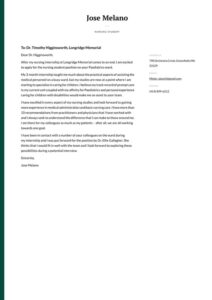
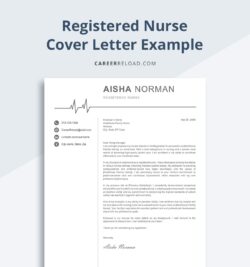
Here’s a practical breakdown of what your nursing cover letter should generally include:
- Your Contact Information: Your full name, address, phone number, and email.
- Date: The date you are sending the letter.
- Hiring Manager Contact Information: Their name (if known), title, institution name, and address. If you don’t know the specific manager, use “Hiring Manager” or “Nurse Recruiter.”
- Professional Salutation: “Dear Ms./Mr./Dr. [Last Name],” or “Dear Hiring Manager,”.
- Paragraph 1 – Introduction: State the position you’re applying for, where you saw it, and a brief, enthusiastic statement about why you’re interested.
- Paragraph 2 – Body Paragraph 1 (Skills & Experience): Highlight 1-2 key skills or experiences directly relevant to the job description. Use an example to illustrate.
- Paragraph 3 – Body Paragraph 2 (Passion & Fit): Explain why you are passionate about nursing in general, and specifically why you are drawn to this institution or unit. Show you’ve researched them.
- Paragraph 4 – Call to Action: Reiterate your interest, mention your enclosed resume, and express your desire for an interview.
- Professional Closing: “Sincerely,” or “Respectfully,”.
- Your Signature: Your typed full name.
Remember, while a solid cover letter template for nursing provides a fantastic starting point, making it uniquely yours is what truly sets you apart. Each section is an opportunity to showcase a different facet of your professional identity, ensuring that the reader gets a comprehensive and compelling picture of who you are as a nurse.
Ultimately, your cover letter is a powerful tool to complement your resume, allowing your personality, dedication, and specific qualifications to shine through. By taking the time to craft a thoughtful and personalized letter, you not only demonstrate your writing skills but also your commitment to excellence—qualities highly valued in the nursing profession. Investing this effort can truly open doors to exciting new opportunities in your nursing career.