Landing your dream job as a medical assistant can feel like navigating a busy clinic during peak hours. You have the skills, the compassion, and the drive, but how do you make sure your application stands out from the pile? That is where a well-crafted cover letter comes in. Think of it as your professional handshake, a chance to introduce yourself and make a memorable first impression even before the interview. This article will provide a comprehensive cover letter template for medical assistant roles, helping you articulate your value and secure that crucial interview.
In today’s competitive healthcare landscape, merely sending a resume often isn’t enough. A compelling cover letter offers a unique opportunity to connect your qualifications directly to the specific needs of the prospective employer. It allows you to expand on your resume, highlighting key experiences and soft skills that truly demonstrate why you are the perfect fit for their team and their patients.
So, instead of seeing it as another chore, view your cover letter as your personal pitch. It’s where you get to tell your story, showcase your enthusiasm, and explain why you’re not just qualified, but truly excited about the prospect of joining their practice. Let’s dive into how you can construct a letter that opens doors.
Crafting Your Standout Medical Assistant Cover Letter
A great cover letter isn’t just about listing your achievements; it’s about telling a story that resonates with the hiring manager. It needs to be professional, personable, and tailored to the specific job you are applying for. Remember, the goal is to show them you are not just capable, but enthusiastic and a perfect cultural fit for their medical environment.
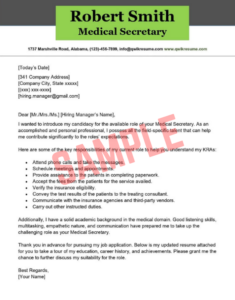
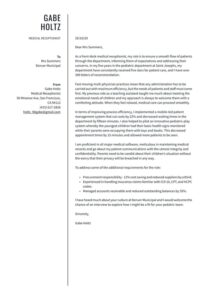
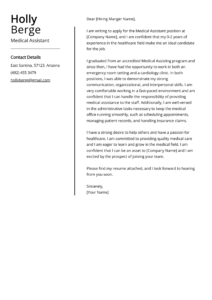
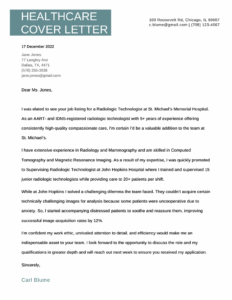
Start with your contact information at the top left, followed by the date, and then the employer’s contact information. This includes the hiring manager’s name if you know it, their title, the clinic or hospital name, and its address. Addressing the letter directly to the hiring manager shows diligence and a personal touch. If you cannot find a specific name, “Hiring Manager” or “Medical Assistant Hiring Team” is acceptable.
Your salutation should be formal but friendly. “Dear Mr. Smith” or “Dear Dr. Jones” is ideal. If you are unsure of the gender, using their full name, “Dear Alex Johnson,” is a safe and respectful option. Avoid overly casual greetings; maintain a professional tone from the very beginning.
The opening paragraph is crucial for grabbing attention. Clearly state the position you are applying for and where you saw the job advertisement. Immediately express your enthusiasm for the role and briefly mention one or two key qualifications that make you an ideal candidate. For example, “I am writing to express my keen interest in the Medical Assistant position at [Clinic Name], as advertised on [Platform]. With my [number] years of experience in [specific area, e.g., patient intake and electronic health records], I am confident I can make an immediate contribution to your dedicated team.”
The body paragraphs are where you truly shine. This is your chance to elaborate on your resume and connect your skills and experiences directly to the job description. Do not just repeat what is on your resume; instead, provide context and examples. Think about the specific tasks mentioned in the job posting, such as managing patient flow, administering injections, handling insurance forms, or maintaining sterile environments. For instance, if the job mentions proficiency with EHR systems, describe your experience with a particular system like Epic or Cerner and how you used it to improve efficiency or accuracy.
Highlighting Your Unique Strengths and Experiences
Dedicate a paragraph to showcasing your soft skills, which are incredibly valuable in a healthcare setting. Talk about your communication skills, empathy, problem-solving abilities, and teamwork. Provide a brief anecdote if possible, illustrating how these skills directly benefited patients or improved clinic operations. Perhaps you helped calm a nervous patient or streamlined a particular administrative process. This personalization makes your application much more memorable than a generic list of qualifications.
Conclude your body paragraphs by reiterating why you are specifically interested in *their* facility. Research their mission, values, or any recent achievements and mention how your own professional goals align with theirs. This demonstrates that you have done your homework and are genuinely invested in working for them, rather than just any medical assistant role.
Finally, your closing paragraph should neatly wrap everything up. Reiterate your strong interest in the position and express your eagerness for an interview to discuss how your skills and passion can benefit their practice. Include a clear call to action, such as “I look forward to the opportunity to discuss my qualifications further in an interview.” End with a professional closing like “Sincerely” or “Best regards,” followed by your typed name.
Before sending, always proofread meticulously. A single typo can undermine your professionalism. Read it aloud to catch awkward phrasing, and consider asking a trusted friend or mentor to review it as well. A polished, well-written cover letter significantly boosts your chances of making it to the next stage.
Key Tips for a Polished Medical Assistant Cover Letter
While having a solid cover letter template for medical assistant roles is a great starting point, a few extra tips can truly elevate your application. Remember, the goal is to make a powerful, positive impression that compels the hiring manager to learn more about you. It is about presenting yourself as a valuable asset even before you step foot in the clinic.
Firstly, always customize. Even with a template, avoid the “one size fits all” approach. Each job posting is unique, and your cover letter should reflect that. Research the clinic or hospital you are applying to. Understand their specialty, their patient demographic, and their values. Weave this knowledge into your letter to show that you are not just sending out generic applications, but are genuinely interested in *their* specific opportunity.
Secondly, keep it concise and focused. Hiring managers are busy, and they appreciate brevity. Aim for one page, split into clear, digestible paragraphs. Get straight to the point and focus on relevant skills and experiences. Use strong action verbs to describe your accomplishments, such as “managed,” “assisted,” “coordinated,” or “implemented.” These words convey confidence and capability.
- Proofread religiously for any spelling or grammatical errors.
- Tailor each letter to the specific job description and organization.
- Highlight your strongest, most relevant skills and experiences.
- Maintain a professional yet enthusiastic tone throughout the letter.
- Include a clear call to action, requesting an interview.
A well-crafted cover letter is your personal advocate, speaking volumes about your professionalism and dedication even before you meet anyone in person. It provides context to your resume, allowing you to tell a compelling story about your career aspirations and how you can contribute to a healthcare team. By taking the time to write a thoughtful and personalized letter, you significantly enhance your chances of securing that interview and moving closer to your desired medical assistant position.
Think of your cover letter as an essential part of your professional brand. It is an opportunity to showcase not just your technical skills, but also your personality, your passion for patient care, and your commitment to excellence. Invest the effort into creating a standout letter, and you will undoubtedly position yourself as a top candidate in the competitive world of medical assisting.