Landing a government job can be a highly rewarding career path, offering stability, excellent benefits, and the chance to contribute to public service. However, navigating the application process often feels like a distinct challenge, especially when it comes to crafting a compelling cover letter. A well-structured and persuasive cover letter is crucial for making a strong first impression, and having a solid cover letter template for government jobs can significantly streamline this process and boost your chances of getting noticed. It’s not just about listing your experience; it’s about strategically showcasing how you fit the specific requirements of public sector roles.
Unlike private sector applications, government agencies frequently have rigorous hiring protocols, sometimes involving complex Applicant Tracking Systems (ATS) and a keen focus on specific competencies. Your cover letter isn’t merely a formality; it’s an opportunity to translate your skills and experience into the language of government hiring managers, demonstrating your understanding of the agency’s mission and values. This means moving beyond generic statements and diving into what makes you uniquely qualified for public service.
We understand that staring at a blank page can be daunting. That’s why we’re here to guide you through creating an effective cover letter that addresses the unique demands of government positions. By the end of this article, you’ll have a clear framework and actionable advice to craft a standout letter that helps you move closer to your dream government career.
The Unique Requirements of a Government Cover Letter
Applying for a government job is often a world apart from seeking employment in the private sector. Government agencies, whether federal, state, or local, operate under specific regulations and priorities. This means your cover letter needs to do more than just introduce you; it must align perfectly with these distinct expectations. Think of it as a bridge between your qualifications and the specific needs of public service, highlighting not just what you can do, but how you can contribute to the public good.
One of the most critical aspects is keyword optimization. Government HR departments, particularly at the federal level, frequently use Applicant Tracking Systems to filter candidates. These systems scan your application documents for specific keywords and phrases directly pulled from the job announcement. If your cover letter doesn’t include these vital terms, you might be overlooked, even if you’re perfectly qualified. Carefully read the job description and identify recurring skills, responsibilities, and qualifications, then naturally weave them into your narrative.
Furthermore, government roles often come with very particular requirements, such as security clearances, specific educational backgrounds, or extensive experience in a niche area. Your cover letter is the ideal place to proactively address these. Don’t wait for an interview to confirm you meet a non-negotiable criterion. Clearly state how you fulfill these prerequisites, providing concrete examples where possible. This immediately reassures the hiring manager that you’ve done your homework and are a serious contender.
Demonstrating your impact and achievements is also paramount. While private sector letters might focus on profitability, government letters should emphasize efficiency, problem-solving, and service delivery. Instead of just listing responsibilities, use the STAR method (Situation, Task, Action, Result) to illustrate how you’ve successfully tackled challenges and achieved positive outcomes in past roles. For example, instead of saying “managed projects,” describe a specific project, your role, the actions you took, and the quantifiable results you achieved for an organization or community.
Soft skills, though often unwritten, are highly valued in public service. Think about integrity, teamwork, strong communication, adaptability, and a commitment to public service. While you might not explicitly list these, your narrative should subtly convey them. Share instances where you collaborated effectively, communicated complex information clearly, or demonstrated resilience in challenging situations. These human elements show you’re not just capable, but also a good fit for a public sector environment that often emphasizes collaboration and ethical conduct.
Ultimately, a generic cover letter simply won’t cut it. Each government job application demands a highly tailored approach. The time you invest in customizing your cover letter to each specific job announcement will pay dividends. It shows respect for the agency, a deep understanding of the role, and a genuine desire to contribute. This meticulous effort is precisely what sets successful candidates apart in the competitive world of government hiring.
Crafting Your Effective Government Cover Letter
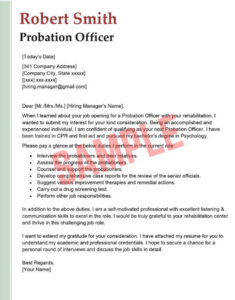
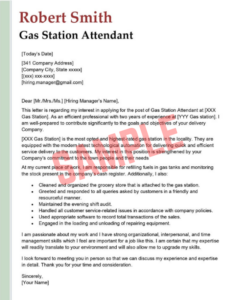
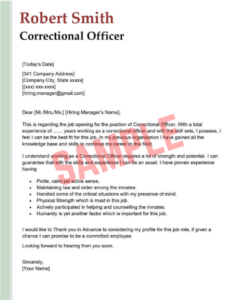
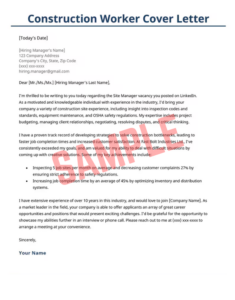
Now that we understand the ‘why,’ let’s delve into the ‘how.’ Building an effective cover letter for government jobs starts with a professional header. Include your contact information (name, phone, email, LinkedIn profile if professional) followed by the date, and then the hiring manager’s name and title, if known, and the agency’s address. A formal salutation, such as “Dear [Hiring Manager Name]” or “Dear Hiring Committee,” sets the right tone. If the hiring manager’s name isn’t provided, “Dear Hiring Manager” is generally acceptable.
Your opening paragraph is your hook. It should immediately state the position you’re applying for, where you saw the advertisement (e.g., USAJOBS, state employment website), and a concise, compelling sentence or two about why you are interested and uniquely qualified. This isn’t the place for lengthy introductions; get straight to the point and make them want to read more. For instance, “I am writing to express my enthusiastic interest in the [Job Title] position, as advertised on [Platform]. With my [X years] of experience in [Relevant Field] and a proven track record in [Key Skill], I am confident I possess the skills and dedication to excel in this role and contribute effectively to your agency’s mission.”
The body paragraphs are where you truly make your case. This is where you connect your skills and experiences directly to the requirements outlined in the job description. Don’t just rehash your resume; instead, elaborate on specific achievements and how they align with the role’s duties and the agency’s objectives. When developing a cover letter template for government jobs, remember to build sections that directly respond to the job’s core competencies.
Here’s a strategic approach for your body paragraphs:
- Read the job description meticulously. Highlight 3-5 key responsibilities, qualifications, or desired skills that resonate most with your background.
- Dedicate a paragraph (or a concise section) to each of these key areas. For example, if “project management” is a key skill, use a paragraph to describe a relevant project you managed, focusing on your specific actions and the positive outcomes.
- Provide concrete examples using the STAR method (Situation, Task, Action, Result). This makes your experience tangible and memorable. Quantify your achievements whenever possible – numbers speak volumes. For instance, “implemented a new filing system that reduced processing time by 20%.”
- Connect your past successes directly to the future needs of the government role. Explicitly state how your experience will benefit the agency.
Your closing paragraph should reiterate your strong interest in the position and the agency, briefly summarize why you are an ideal candidate, and include a polite call to action. Express your eagerness for an interview to discuss how your qualifications can benefit their team. A professional closing, such as “Sincerely” or “Respectfully,” followed by your typed name, is appropriate. Remember to maintain a confident yet humble tone throughout.
Finally, before sending, rigorously proofread your cover letter. Even minor typos or grammatical errors can detract from your professionalism and attention to detail. Consider having a trusted friend or colleague review it as well. Ensure all names, titles, and agency details are correct. A flawless cover letter underscores your commitment and meticulous nature, qualities highly valued in government service.
Crafting an exceptional cover letter for a government job is undoubtedly a significant undertaking, but it’s an investment that can open doors to a fulfilling career. By understanding the unique expectations of public sector hiring, tailoring your message to each specific announcement, and showcasing your abilities with compelling, specific examples, you elevate your application above the competition. It’s about demonstrating not just that you can do the job, but that you genuinely understand and are committed to the mission of public service.
Your cover letter is more than just a piece of paper; it’s your personal advocate, a powerful tool to convey your passion, professionalism, and potential contribution to the government agency. Embrace the process, take pride in detailing your qualifications, and approach each application with confidence. Your dedication to creating a powerful introduction will undoubtedly set you on the right path toward securing a meaningful role in government.