Landing your dream role in the dynamic world of construction often requires more than just a solid resume. It demands a compelling introduction, something that truly speaks to your skills and aspirations. That’s where a well-crafted cover letter comes into play. If you’re looking for a reliable cover letter template for construction job applications, you’re in the right place. We understand that showcasing your experience in a way that stands out can be a challenge, but it’s an essential step in securing that next big opportunity.
Think of your cover letter not just as a formality, but as your personal sales pitch. It’s a chance to tell a prospective employer *why* you’re the perfect fit for their team, beyond what bullet points on a resume can convey. It allows you to elaborate on specific projects, highlight your problem-solving abilities, and demonstrate your passion for building and creating.
This guide will walk you through the key elements of a powerful cover letter, providing you with the framework and inspiration to create a document that truly opens doors. We’ll explore how to effectively communicate your value and leave a lasting impression on hiring managers in the construction industry.
Crafting a Winning Cover Letter for Construction Roles
A strong cover letter can be the difference between getting an interview and being overlooked. For construction roles, employers are looking for practical skills, a strong work ethic, and a clear understanding of site safety and project demands. Your letter needs to convey these qualities clearly and concisely, while also demonstrating your enthusiasm for the specific company and position. It’s an opportunity to connect the dots between your background and their needs.
Making Your Opening Statement Count
The first paragraph is crucial. It needs to grab the reader’s attention and clearly state why you’re writing. Mention the specific job title you’re applying for and where you saw the advertisement. If you have a referral, this is the perfect place to mention it. Immediately follow this with a concise statement about why you are a strong candidate, perhaps highlighting a key skill or relevant experience that aligns with the job description. This sets the tone and makes the hiring manager eager to read more about your qualifications.
Highlighting Your Construction Prowess
The body paragraphs are where you truly shine. Instead of simply repeating your resume, elaborate on specific experiences and achievements. Did you manage a project that came in under budget? Were you instrumental in implementing new safety protocols that reduced incidents? Did you successfully operate complex machinery or lead a team through a challenging phase of construction? Use vivid language and, where possible, quantify your successes with numbers. For example, “Successfully oversaw the concrete pouring phase for a 20-story commercial building, ensuring adherence to schedule and zero safety violations.”
Focus on skills most relevant to construction, such as project management, blueprint reading, operating heavy equipment, team leadership, problem-solving on-site, and a strong commitment to safety. Show that you understand the demands of the job and are ready to contribute from day one. It’s not just about what you’ve done, but how it directly benefits the company you’re applying to.
The Power of Personalization
Generic cover letters rarely make an impact. Take the time to research the company you’re applying to. Understand their mission, recent projects, and company culture. Weave this knowledge into your letter. For example, “I was particularly impressed by [Company Name]’s commitment to sustainable building practices, as demonstrated in your recent [Project Name] project, which aligns perfectly with my experience in eco-friendly construction techniques.” This shows genuine interest and makes your application feel much more personal and thoughtful.
Your cover letter is also a place to explain any gaps in employment or career transitions in a positive light, if necessary. It allows you to add context to your resume and present a comprehensive picture of your professional journey. This level of detail and personalization is what transforms a standard application into a memorable one.
Essential Elements of Your Construction Cover Letter
While the content is king, the structure and presentation of your cover letter also play a vital role. A professionally formatted letter is easy to read and reflects positively on your attention to detail. It shows respect for the hiring manager’s time and demonstrates your professionalism even before they delve into your qualifications.
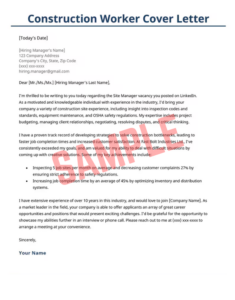
Your cover letter should always begin with your contact information, followed by the date, and then the hiring manager’s contact information (if known). Address the letter directly to the hiring manager by name. If you can’t find a specific name, “Dear Hiring Manager” or “Dear [Department] Team” is acceptable, but always try to personalize it if possible.
After your compelling introduction and body paragraphs detailing your relevant experience and skills, you need a strong closing. Reiterate your enthusiasm for the position and the company, and express your eagerness for an interview to discuss how your skills can benefit their team. A clear call to action invites them to take the next step.
Finally, always close professionally with “Sincerely,” or “Regards,” followed by your typed name and signature. Proofread your letter meticulously for any grammatical errors or typos. A flawless cover letter demonstrates your professionalism and attention to detail, qualities highly valued in the construction industry.
A well-crafted letter can significantly boost your chances of getting noticed in a competitive job market. It bridges the gap between your resume and a face-to-face interview, allowing you to present a more complete and compelling narrative of your professional capabilities and aspirations.
Taking the time to personalize and refine your cover letter is an investment in your career. It shows dedication and a genuine desire for the role, qualities that resonate deeply with potential employers. Present yourself as the dedicated, skilled professional you are, and you’ll be well on your way to building your future.