Landing a great clerical position often starts long before you even step into an interview. It begins with your application, and a standout cover letter can make all the difference. If you’re looking for guidance on how to craft one, then you’re in the right place, because we’re going to walk you through creating an effective cover letter template for clerical position roles. Think of it as your first chance to make a strong impression, showcasing your professionalism and suitability for the job before anyone even looks at your resume in detail.
Clerical positions are the backbone of countless organizations, requiring a keen eye for detail, superb organizational skills, and excellent communication abilities. Whether it’s managing schedules, handling correspondence, data entry, or customer service, these roles demand a level of precision and dedication that needs to shine through in your application materials. A generic cover letter simply won’t cut it when you’re aiming for a role where attention to detail is paramount.
That’s why understanding the components of a compelling cover letter is so important. It allows you to tailor your application to specific opportunities, highlighting exactly why you are the perfect candidate for that particular office environment. We’ll explore what makes a clerical cover letter truly effective, offering insights and a structure to help you build your own winning document.
Crafting Your Perfect Clerical Cover Letter: What to Include
Your cover letter is much more than just a formality; it’s your professional introduction, your handshake before the interview. It’s an opportunity to expand on the bullet points in your resume, adding personality and context to your skills and experiences. For a clerical position, this means demonstrating your ability to communicate clearly, organize information logically, and present yourself professionally from the very first word.
Starting Strong: Your Contact Information and the Date
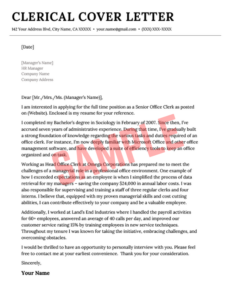
Every professional document begins with the essentials. At the very top of your letter, you’ll want to include your full name, address, phone number, and a professional email address. Below that, add the current date. Following the date, provide the hiring manager’s name and title (if you know it), along with the company’s name and address. Taking the time to find the specific hiring manager’s name shows initiative and attention to detail, qualities highly valued in clerical roles. If you can’t find a specific name, a general but professional salutation like “Hiring Manager” or “Hiring Team” is acceptable.
The Opening Hook: Why You’re a Great Fit
The first paragraph is crucial for capturing the reader’s attention. State clearly the position you are applying for and where you saw the job advertisement. Immediately follow this with a concise statement about why you are interested in this specific role and why you believe your skills and experience make you an ideal candidate. For a clerical role, you might mention your passion for organization, your proven track record in administrative support, or your exceptional ability to manage multiple tasks efficiently.
Highlighting Your Skills and Experience
This is where you connect your past experiences and skills directly to the requirements of the clerical position. Think about the key responsibilities listed in the job description, such as data entry, scheduling, customer service, document management, or proficiency with office software like Microsoft Office Suite. Instead of just listing these skills, provide brief examples of how you’ve applied them effectively. For instance, you could mention “Successfully managed daily schedules for a team of five, improving efficiency by 15 percent” or “Accurately processed an average of 100 data entries per day with a zero error rate.”
Demonstrating Enthusiasm and Professionalism
In the final body paragraph, reiterate your enthusiasm for the position and the company. Briefly explain how your skills and career aspirations align with the company’s mission or values. This shows that you’ve done your homework and are genuinely interested in contributing to their specific environment. For example, if the company values a collaborative atmosphere, you might mention your strong teamwork skills.
The Professional Closing
Conclude your letter by expressing your eagerness for an interview to discuss your qualifications further. Thank them for their time and consideration. A professional closing, such as “Sincerely” or “Regards,” followed by your typed full name, completes the letter. Remember, every element of this document reflects your professionalism, so ensure it is polished and error-free.
Tips for Customizing Your Cover Letter
While a cover letter template for clerical position roles provides a fantastic starting point, the real magic happens when you customize it. Simply copying and pasting will not make you stand out; tailoring your letter to each specific job application is what truly makes a difference. Hiring managers can spot a generic letter from a mile away, and it often signals a lack of genuine interest or attention to detail.
Here are some ways to ensure your cover letter is unique and impactful:
- Read the job description carefully and highlight keywords. Make sure these keywords appear naturally in your cover letter.
- Research the company’s website, social media, and recent news. Understand their mission, values, and current projects.
- Mention specific achievements or projects from your past roles that directly relate to the clerical duties outlined in the job posting.
- If you have a connection at the company, mention it respectfully. For example, “I was excited to see this opening, particularly after speaking with [Name], who spoke highly of your team’s innovative approach.”
- Always proofread meticulously. A single typo can undermine your message of attention to detail, which is crucial for a clerical role. Reading it aloud or having a friend review it can catch overlooked errors.
Taking the time to personalize each cover letter demonstrates your commitment, your understanding of the role, and your genuine desire to work for that particular organization. It transforms your application from just another piece of paper into a compelling narrative that showcases your unique value.
A well-crafted cover letter is your first and best advocate in the job search. It’s an opportunity to shine a spotlight on your strengths, articulate your enthusiasm, and bridge the gap between your resume and the specific needs of the clerical role you’re applying for. By investing time and thought into this crucial document, you significantly increase your chances of moving forward in the hiring process.
Remember, the goal is to make it easy for the hiring manager to see you as an indispensable asset to their team. By presenting a professional, customized, and persuasive cover letter, you’re not just applying for a job; you’re making a strong case for why you are the best person to fill that vital clerical position.