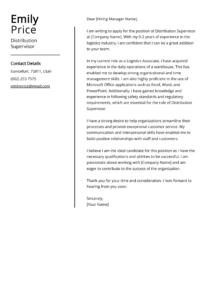
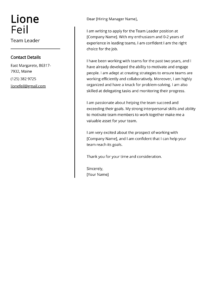
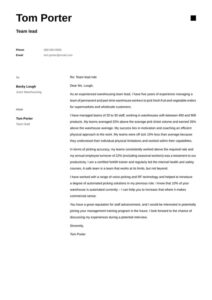
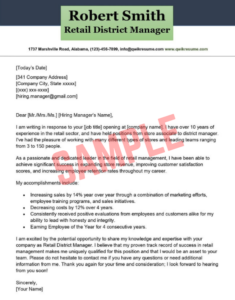
Stepping into a leadership role is a significant milestone in any career path. Whether you are aiming for your first supervisory position or you are a seasoned manager looking for a fresh challenge, your application needs to stand out from the crowd of qualified candidates. Using a professional team leader cover letter template can give you the structural foundation you need to highlight your unique management style and your ability to drive results through others. It is not just about listing your duties; it is about telling a story of how you inspire a group of individuals to work as a cohesive unit toward a common goal.
Most job seekers focus heavily on their resumes, often treating the cover letter as a mere formality or a summary of their work history. However, for a leadership role, the cover letter is actually your first opportunity to demonstrate your communication skills and your strategic thinking. It allows you to address the hiring manager directly and explain the “why” behind your achievements. While a resume shows what you did, the cover letter explains how you lead, how you handle conflict, and how you mentor those around you to reach their full potential.
In the following sections, we will explore how to take a basic framework and turn it into a compelling narrative that captures the attention of recruiters. We will look at the specific nuances that make a leadership application successful and how you can tailor your message to fit the specific needs of the company you are targeting. By the time you finish reading, you will have a clear understanding of how to position yourself as the ideal candidate who can hit the ground running and add immediate value to the organization.
Transforming Your Professional Story into a Leadership Narrative
When you sit down to write, you might feel the urge to simply list every project you have ever managed. Instead of taking that approach, think about the specific qualities that the company is looking for in a team leader. They want someone who can solve problems, manage resources efficiently, and maintain high levels of employee engagement. Your goal is to weave these elements into a narrative that proves you are not just a manager of tasks, but a leader of people. Use the middle paragraphs of your letter to showcase specific instances where your intervention led to a positive outcome for the business.
It is also important to touch upon your philosophy of management. Are you a servant leader who prioritizes the needs of the team? Or are you a visionary who focuses on high-level strategy and long-term growth? Sharing a bit of your personality and your approach to mentorship can help the hiring manager visualize you working within their existing corporate culture. This personal touch is often what separates an average candidate from one who gets invited for an interview.
Highlighting Measurable Impact and Results
In the world of leadership, numbers often speak louder than words. While you want to keep your writing conversational, you should find ways to incorporate data that backs up your claims. If you helped reduce turnover, mention the percentage. If your team exceeded sales targets, state by how much. This provides concrete evidence of your effectiveness. By using a team leader cover letter template as your guide, you can ensure that these statistics are placed in a context that makes sense and doesn’t feel like a dry list of facts.
Think about a time when you had to navigate a particularly difficult challenge, such as a tight deadline or a period of organizational change. Describing how you kept the team motivated and focused during these times shows resilience and emotional intelligence. These are the soft skills that recruiters are desperately looking for but often find missing in standard applications. Your ability to remain calm under pressure and provide a clear sense of direction is a hallmark of great leadership.
Building Trust Through Authentic Communication
Authenticity is a key component of modern leadership. When writing your cover letter, avoid using overly formal or robotic language that makes you sound like a textbook. Instead, write in a way that feels natural and professional. You want the reader to feel like they are having a conversation with a real person who is genuinely excited about the opportunity. Share what draws you to this specific company and why their mission resonates with your professional values.
Finally, remember that leadership is a two-way street. It is not just about what you can get out of the team, but what you can give back to them. Mentioning your commitment to professional development and your history of helping subordinates advance in their own careers can be a very powerful selling point. Companies want leaders who will grow the next generation of talent, and showing that you take this responsibility seriously will make you a much more attractive prospect for any high-level role.
The Structural Components of a Strong Application
Organizing your thoughts is just as important as the words you choose. A well-structured letter shows that you are organized and capable of presenting complex information in an easy-to-digest format. You should start with a strong opening that grabs attention and finish with a confident call to action. In between, you need to bridge the gap between your past experiences and the requirements of the new role. This logical flow helps the recruiter follow your career progression and see the logic behind your application.
When you are looking at the overall layout, make sure there is plenty of white space so the document does not look cluttered. Using lists can be a great way to highlight specific skills or achievements without overwhelming the reader with long blocks of text. Here are a few things you might want to include in a list format within your letter:
Once you have the content down, take the time to proofread everything carefully. Even the best leader can look unprofessional if their cover letter is full of typos or grammatical errors. It can be helpful to read your letter out loud to see how it flows and to ensure that the tone remains consistent throughout. Ask yourself if the letter truly represents who you are as a professional and if it clearly explains why you are the best fit for this specific team leader position.
Finding the right balance between confidence and humility is the secret to a great leadership application. You want to show that you are capable and ready to take charge, but also that you are a team player who values the input of others. By focusing on your ability to build relationships and drive success, you will create a compelling argument for your candidacy that goes far beyond what a resume can achieve on its own.
The journey to your next leadership role begins with the very first word you write. Taking the time to craft a thoughtful and personalized message shows that you are serious about the opportunity and that you have the communication skills required for the job. Use the strategies discussed here to refine your approach and present your best self to potential employers. With a clear vision and a well-structured document, you will be well on your way to securing the interview and moving one step closer to your career goals.