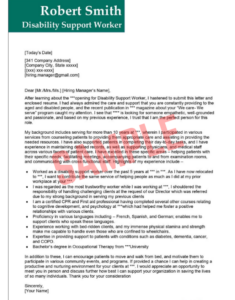
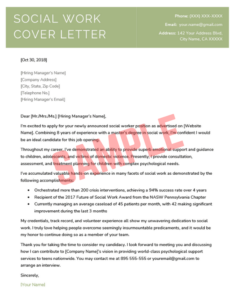
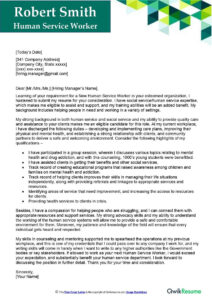
Starting a career in helping others is a noble pursuit, but before you can start making a difference, you have to get through the hiring process. Finding the right words to describe your passion for advocacy and clinical support can be tough, which is why using a social work cover letter template can be a game-changer for your application. It helps you organize your thoughts so that your commitment to the community shines through without getting lost in a wall of text.
Many social workers find it easier to advocate for their clients than for themselves. When you sit down to write about your own achievements, it can feel a bit awkward or even boastful. However, the hiring manager needs to see that you have the professional stamina and the specific skill set required to handle complex caseloads and sensitive situations. A well-structured letter bridges the gap between your resume and the person you are in the field.
A good framework allows you to balance the technical aspects of your education with the heart-centered nature of the work. You want to show that you are not just a list of certifications but a person who brings empathy, resilience, and critical thinking to every intervention. By following a thoughtful structure, you can ensure that you cover all the necessary bases while still letting your unique personality and professional philosophy take center stage.
How to Structure Your Narrative for Success
Start with the basics because professionalism is key in the social services sector. Your contact information should be clear and professional, followed by a formal greeting to the hiring manager. If you can find the name of the department head or the HR lead, use it. It shows you did your homework and that you are serious about this specific role rather than just sending out a generic document to every open position in the city.
The opening paragraph needs to grab their attention immediately. State the position you are applying for and give a brief overview of why you are a fit. This is the place to mention your years of experience or a specific certification that makes you uniquely qualified for the demographic they serve. You want the reader to feel confident that you understand the challenges associated with the role from the very first sentence.
Focusing on Your Impact and Experience
In the middle sections, you should dive into your clinical or field experience. Talk about the specific populations you have worked with, whether that is at-risk youth, veterans, or individuals struggling with substance abuse. Instead of just listing duties, try to describe a time you saw a positive outcome because of a strategy you implemented. Concrete examples of your work provide a window into your decision-making process and your ability to handle real-world challenges.
Social work is heavily based on ethics and boundaries, so it is helpful to mention your adherence to professional standards. Discussing your familiarity with crisis intervention or various therapeutic modalities shows that you have the practical tools to handle high-stress environments. Hiring managers look for candidates who can hit the ground running and who demonstrate a deep understanding of the professional boundaries required to maintain a healthy career in this field.
The Importance of Collaboration and Documentation
Do not forget to highlight your administrative skills. While the direct work with clients is the heart of the job, documentation and interdisciplinary teamwork are the backbone. Mentioning your experience with electronic health records or collaborating with legal teams and medical professionals will prove that you understand the full scope of the role. A social worker who can write clear, concise reports is just as valuable as one who is great in a clinical setting.
Finally, your closing paragraph should reiterate your enthusiasm and invite a conversation. Express that you are eager to learn more about how the agency goals align with your professional philosophy. A strong, polite call to action is the best way to wrap up the narrative portion of your application. It leaves the hiring manager with a sense of your professional courtesy and your genuine interest in joining their specific team.
Tips for Customizing Your Application
Every agency has a different culture and mission statement. Before you send out your application, spend some time reading about the organization’s history and current projects. Incorporating their values into your writing shows that you are not just sending out mass applications, but that you truly want to work for them specifically. This level of detail can often be the deciding factor when a manager is choosing between two equally qualified candidates.
Language matters in this field. If the job description emphasizes trauma-informed care or restorative justice, make sure those terms appear naturally in your text. Using the same terminology as the employer demonstrates that you are current with industry trends and possess the specific knowledge they are seeking. It bridges the gap between your previous experiences and the specific requirements of the new role you are pursuing.
When you are refining your social work cover letter template, remember that less is often more. Keep your writing concise and avoid overly academic jargon unless it is necessary to prove your expertise. Your goal is to be accessible yet professional, demonstrating that you can communicate effectively with both clients and colleagues alike. Here are a few key elements you should double-check before hitting the submit button:
Navigating the job market in the social services sector requires patience and persistence. It is a field that demands a lot from its professionals, so taking the time to present yourself well from the very beginning is a sign of your dedication. By focusing on your unique strengths and your genuine desire to help others, you will stand out to recruiters who are looking for the right heart and mind for their team.
Remember that your story is your most powerful tool. While the technical qualifications get you through the door, your personal journey and your professional observations are what will truly resonate. Keep refining your approach, stay true to your values, and you will eventually find the perfect fit where you can make the impact you have always dreamed of making in the lives of those you serve.